Hill (s)training

hills

Running hills are a pain in the butt for most of us and I’ll be damned if I would suddenly start doing hill repeats of any kind. In my world I have two choices: either make peace with walking all hills, always, or try to slowly trot to the top. Running hills, for me, is a contradiction in terms.

Admittedly I do walk most hills, especially the really steep ones. But as we know, hills make you strong so jogging up is definitely the better option. I will also acknowledge that the biggest gain in running hills is mental achievement, which in itself makes a massive difference in your perceived fitness levels.

As an average or slow runner, I’m as mentioned not in the market for hill repeats or hill training. I think you have to be able to run up a hill first before you can try to repeat it! If you can’t get up the blooming hill in the first place, how are you going to practise getting faster?

So here’s my 2cents worth of advice: the only way I can get myself up and over a hill is to just take it really really easy. Mimic the running action, but shorten your stride significantly. The aim is not to go out of breath or exert yourself to the point of no return. Use the same amount of effort as you would on the flat, keep your breathing and running rhythm the same, but progress s-l-o-w-l-y up the hill. When you get to the top, you should be able to continue running, while gradually increasing your stride length again to normal.

Hills should literally be taken in your stride. The confidence boost from getting to the top while still feeling okey, is phenomenal. Once you realise you can do it, hills are not so daunting and dreadful anymore. The key is to take it easy, really easy, even if it means running slower than what you could walk up a hill. The end result is you ran up the hill and didn’t succumb to walking. If you keep on doing this with every hill you encounter, it will automatically get easier! That I can vouch for, because hills are the necessary evil that makes you strong.

Now go out and tackle those hills head on with confidence. You can do it! 🙂


North Range Road training run

One of the problems when training for ultra-long events, is that you need to spend a lot of time on the road. Which means, unless you are inordinately blessed with a limitless supply of training routes and trails close to where you live, you are bound to end up traversing the same routes over and over. Using events as training runs is a great way to break the monotony, mix things up and keep your running exciting, but given the cost of many races in NZ, it also is one of the best ways to blow your budget faster than you can say “marathon”, as we dearly discovered during these past few months. Continue reading

‘Je Suis Charlie’ Unity Run for Liberté, Egalité and Fraternité

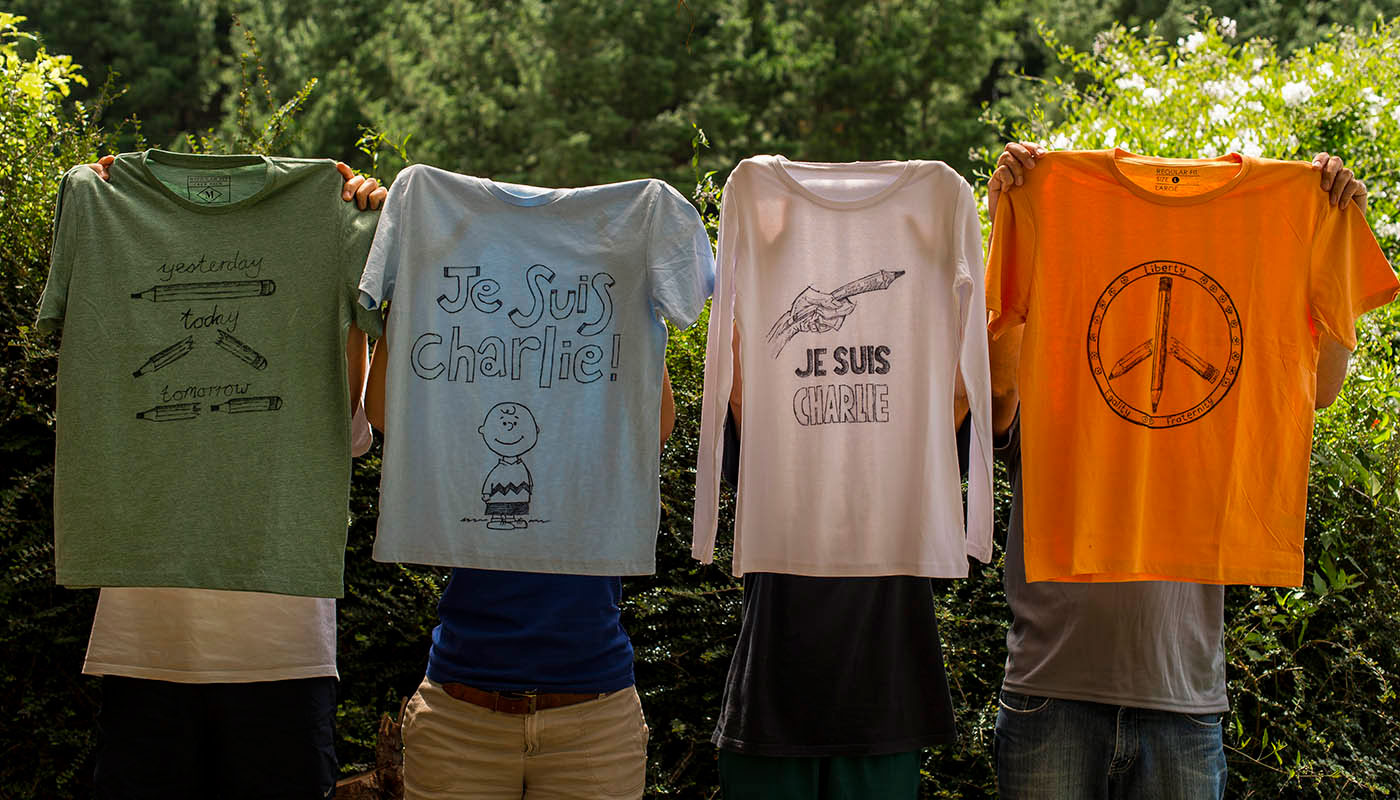
Our running shirts for the Je Suis Charlie Unity Run for Liberté, Egalité and Fraternité.

Our running shirts for the Je Suis Charlie Unity Run for Liberté, Egalité and Fraternité.

This week’s news was dominated by the 7 January 2015 massacre in Paris France, where 12 people were killed at the offices of the satirical newspaper Charlie Hebdo. The terror attack resulted in millions of people internationally rallying in support of those wounded and killed at the newspaper, as well as the victims of related attacks at Montrouge and the Kosher Supermarket.

“Je Suis Charlie” (“I am Charlie”) became the slogan adopted by supporters of free speech and freedom of expression – it popped up everywhere, in cartoons, hand-made placards and stickers, displayed on mobile phones at vigils, and on numerous websites.

A couple of days ago, via Facebook, we came across the Je Suis Charlie Unity Run for Liberté, Egalité and Fraternité, an international run of support scheduled for 11 January – an initiative we had little hesitation to support. Continue reading

Kepler Challenge training dry run

Date: 22 December 2014
Distance: 60km (some sources give it as 67km – I would love that to be the case!)
Time: 11:58

Things don’t always go according to plan. But sometimes they do. This self-supported run had a bit of both.

We were booked to hike the Kepler Track, a 60km circular route, over Xmas with family. And so I thought to myself, why not run it a couple of days prior to the hike? Luckily it didn’t take much convincing to get Gerry on board as we thought it would make for a great last long run before the Tarawera, and we needed to test our hydration and fuelling needs for these kinds of events anyway.

Continue reading

GPS running

A few months ago, at the Rotorua Marathon, Wouna was the lucky winner of a Timex watch (as one of the major spot prizes). Given, however, that she never wears a watch, and that we have been forever thinking about getting a GPS watch, we decided to try and trade in the watch for a GPS enabled model. I initially didn’t have high hopes that we would be able to do this, but when I contacted GMB Watches, the NZ agents for Timex, they were extremely friendly and helpful, and without any quibbles arrangements were made for us to exchange the watch for a GPS model, simply paying in the difference in cost, during our next visit to Auckland.

The watch we decided on was the Timex Ironman Run Trainer 2.0 GPS (quite a mouthful!), a sleek and functional GPS device that doesn’t set you back an arm and a leg, like some of the other high-end, very sophisticated GPS watches on the market. To keep things simple and to further keep costs in check, we opted for the version without a heart rate monitor.

I couldn’t wait to get my hands on the new toy, and my excitement knew no bounds when we finally picked up the watch in early June. Unfortunately our visit to Auckland coincided with one of the most dreadfully stormy weeks the city has seen in a long time, so it was only after we arrived back in Palmy a few days later that I finally had a chance to try the watch on the run.
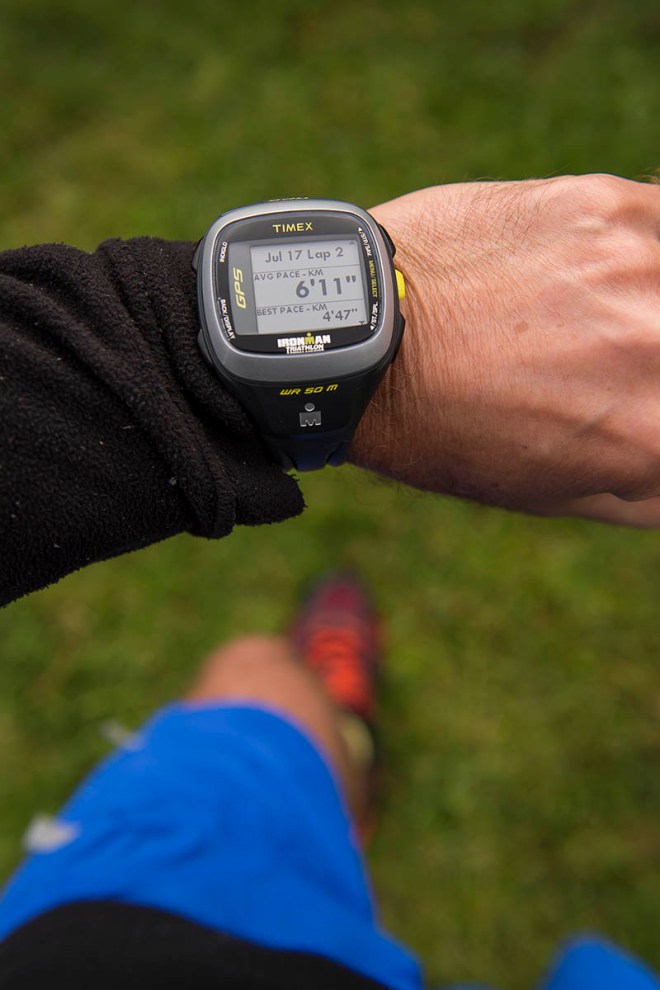
My Timex Ironman Run Trainer 2.0 GPS. A treasure trove of useful, realtime running info.

My Timex Ironman Run Trainer 2.0 GPS. A treasure trove of useful, realtime running info.

I had a lot of fun comparing the kilometer distances of our regular training route with the distances we had figured out before by driving the route. I’m happy to report our earlier measurements were pretty spot on – I would have been really gutted had I discovered that our 8km training route was only 7km long, or some similar horror story.

For the past month or so, I’ve been using my GPS watch non-stop to clock all our runs, including the recent Wellington Marathon, and it really does add a new dimension to running, especially if you download the run data onto one of the many web-based sporting platforms out there. I’m finding the Strava platform particularly enjoyable – not only can you log your training history (complete with detail about the shoes you were wearing etc), but you can share your runs via social media (Facebook, Twitter etc), follow the training of other runners, and explore routes in a specific region. To spice things up further you can subscribe to various challenges (personal or public), and compare your performance to others.

Interestingly enough, the added awareness and knowledge gained by running with a device providing realtime feedback on your distance, speed etc can have an interesting impact on your performance. If you feel like you’re running at a snappy pace, but find your watch telling you you’re not really speeding along, it can be disheartening. Conversely, you may think you’re running comfortably within yourself, only to have your trusty GPS tell you you’re running faster than you thought, which can result in one of two reactions – you can either be boosted by the fact that you are performing beyond your expectations, or you may suddenly, on the spot, feel tired as a result of the realisation that you’re running faster than you thought.

We experienced the latter first-hand during the recent Wellington marathon – by around the 24 km mark we were happily jogging along, chatting away, going at a merry pace of about 6:08 mins/km, which is a fair bit faster than our usual marathon pace. I’d made no mention of the speed we were going, but when Wouna asked I couldn’t lie, so I broke the news of our pace. And lo and behold, almost immediately our pace started dropping. OK, so perhaps it wasn’t a case of suddenly feeling over-exerted, but rather just a subconscious decision to preserve ourselves a little better for the latter part of the course, but we definitely slowed down from that point onwards, and I am very curious to know how we would have performed had we not been aware of the exact pace we were running at.

The Strava GPS overview of our Wellington Marathon performance.

Whatever the case might be, the genie is out of the bottle, and I for one definitely prefer the added info gained during and after every run. We hope to use the GPS on a few trail runs in the near future, where kilometer markings are often lacking, and look forward to experiencing the extra GPS input during our run. More on this soon!