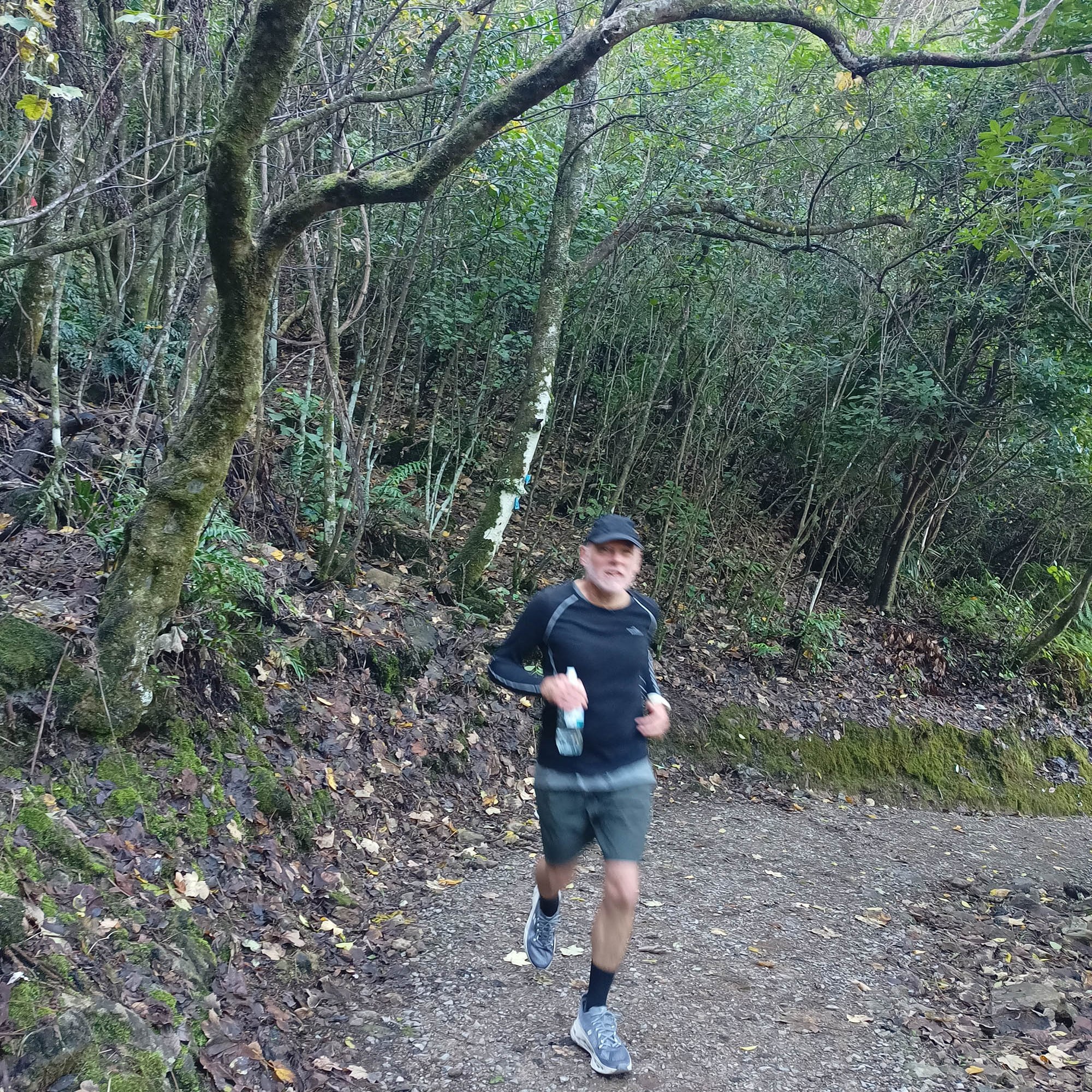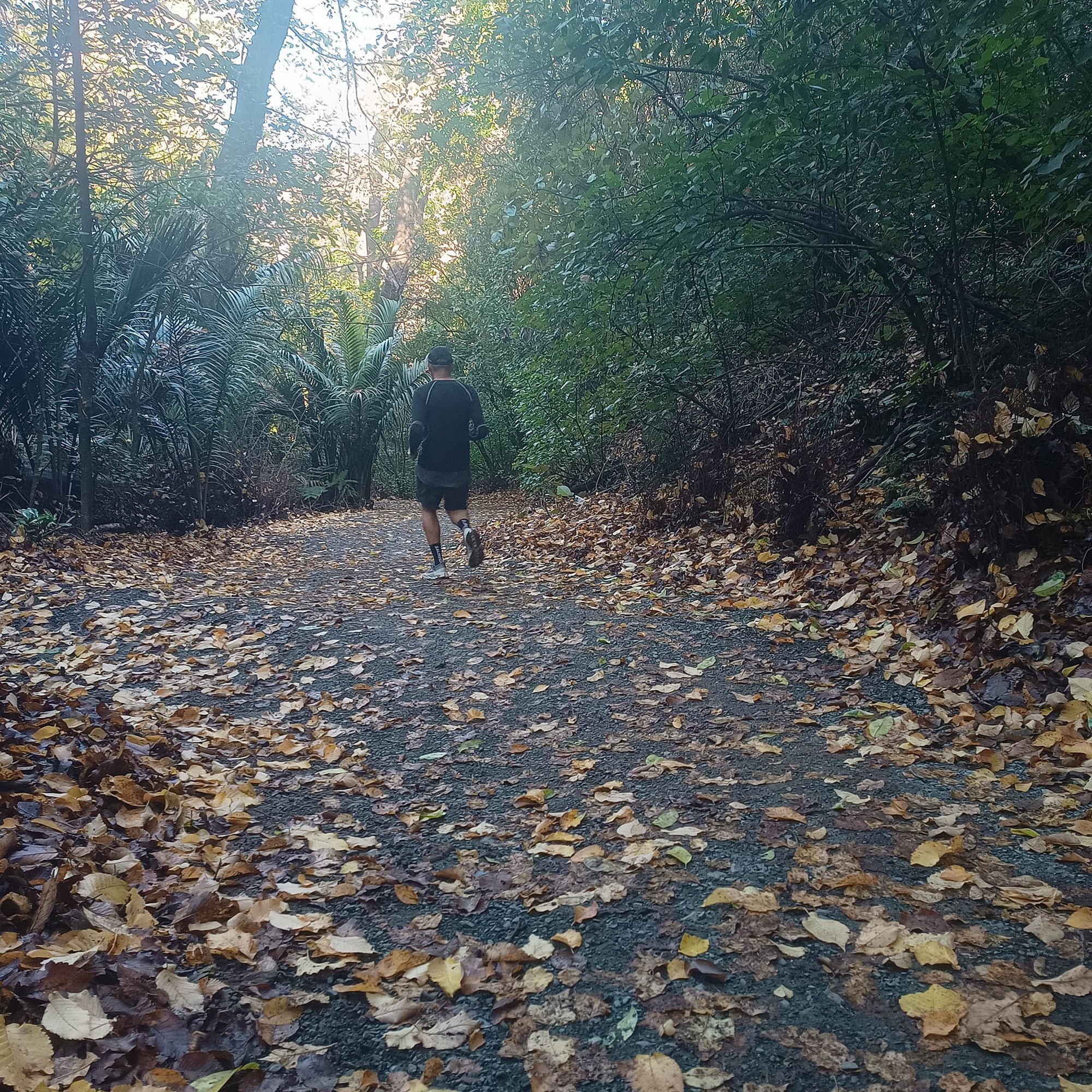
24-Hour isolation challenge

Date: 24-25 April 2020
Time: 24 hours
Distance: 103km

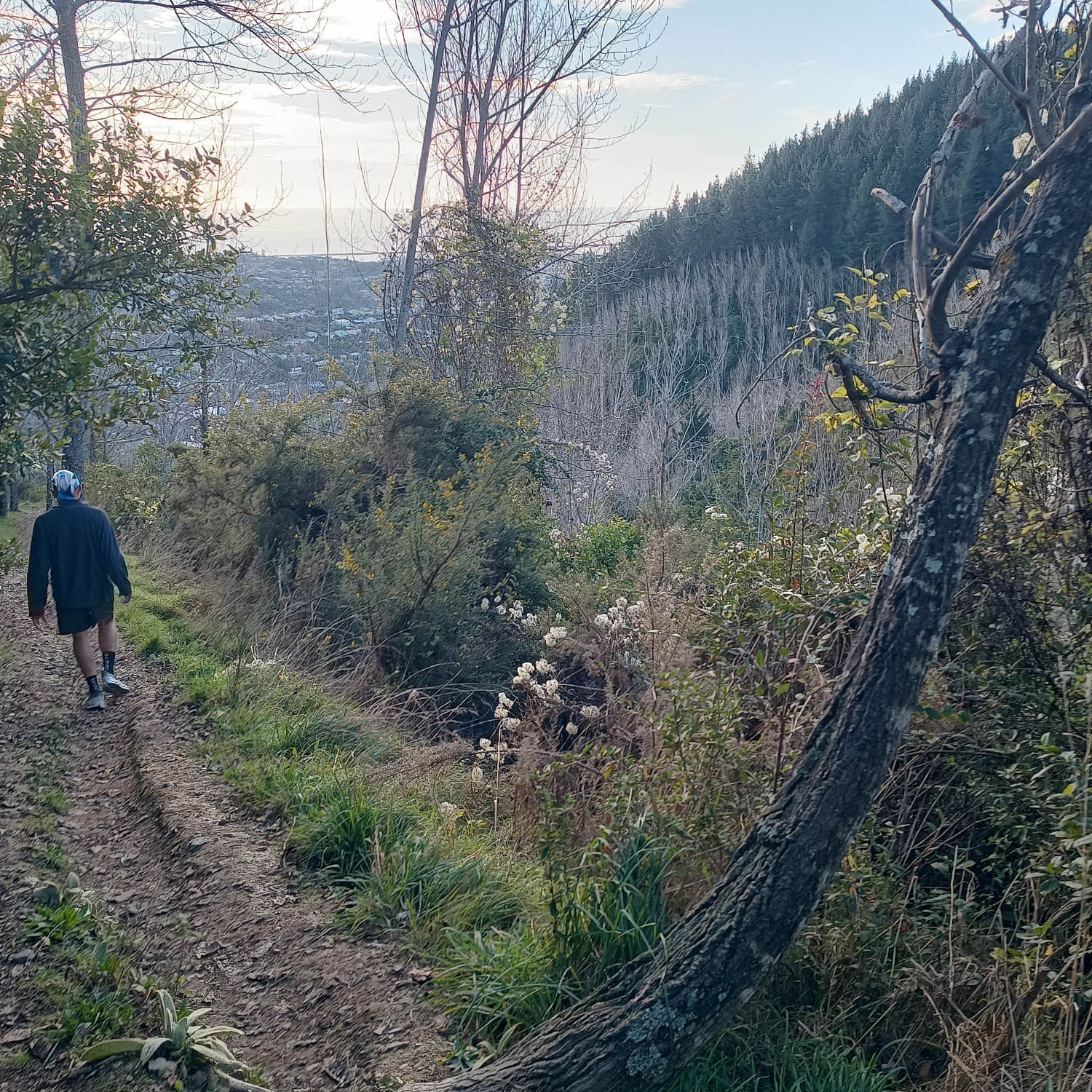
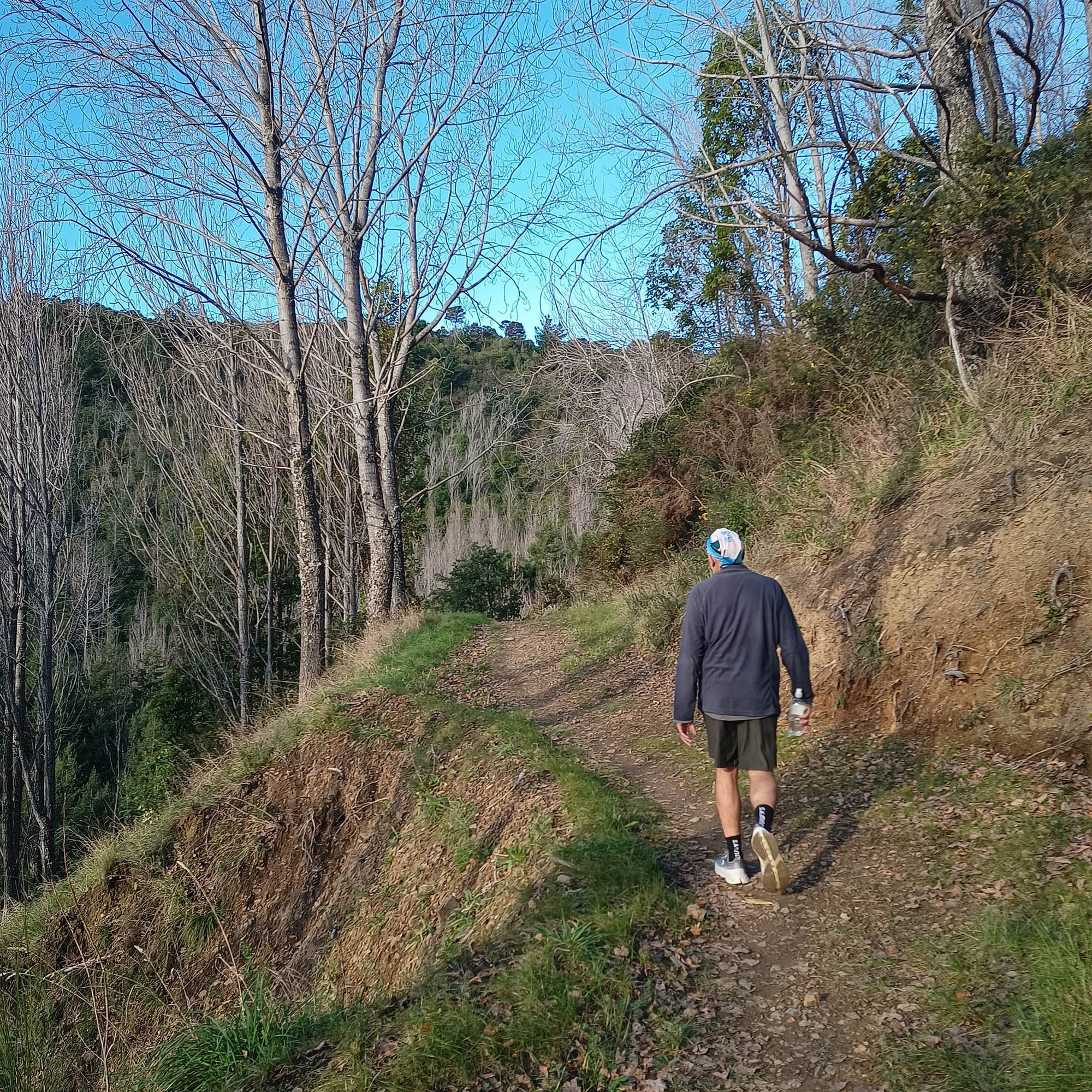
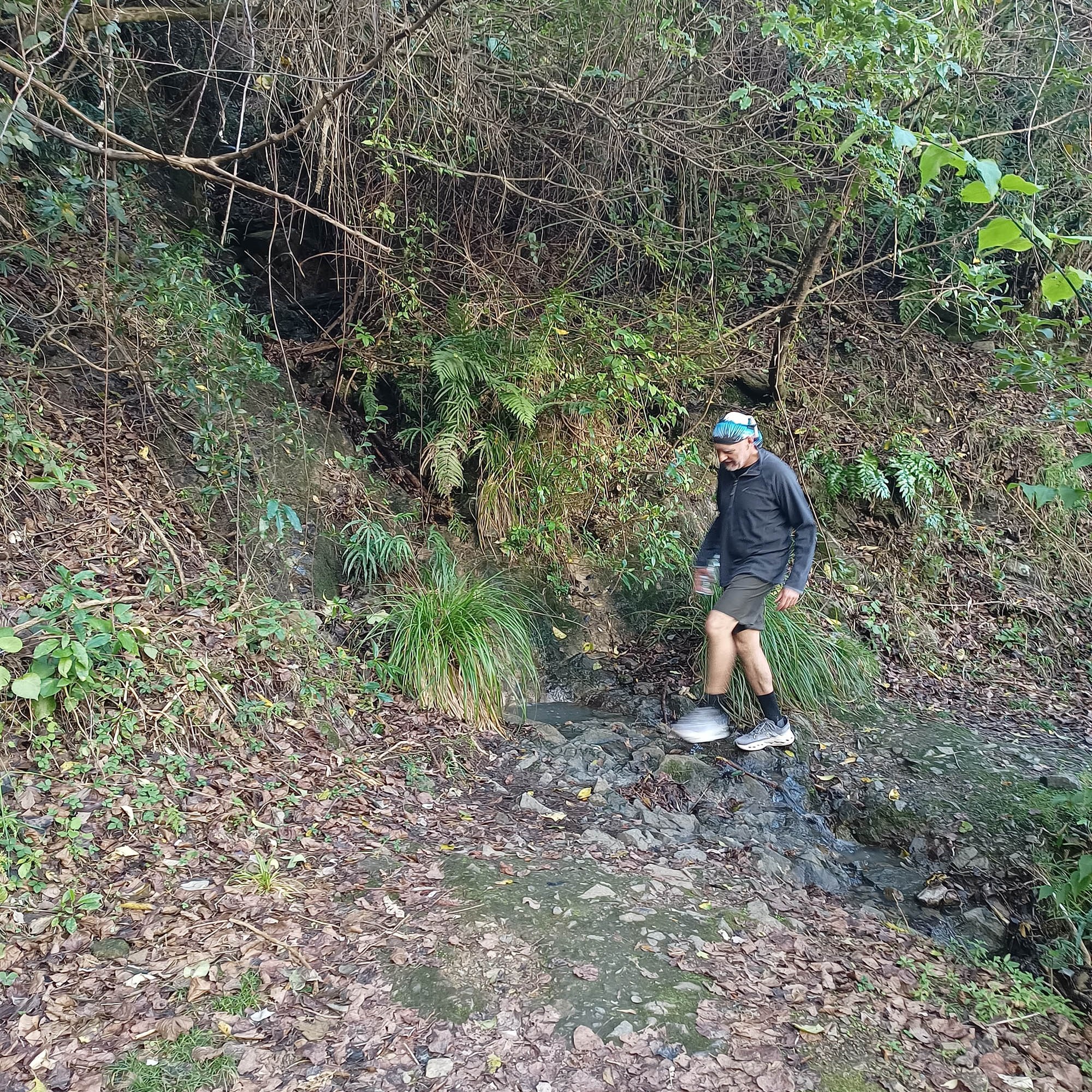
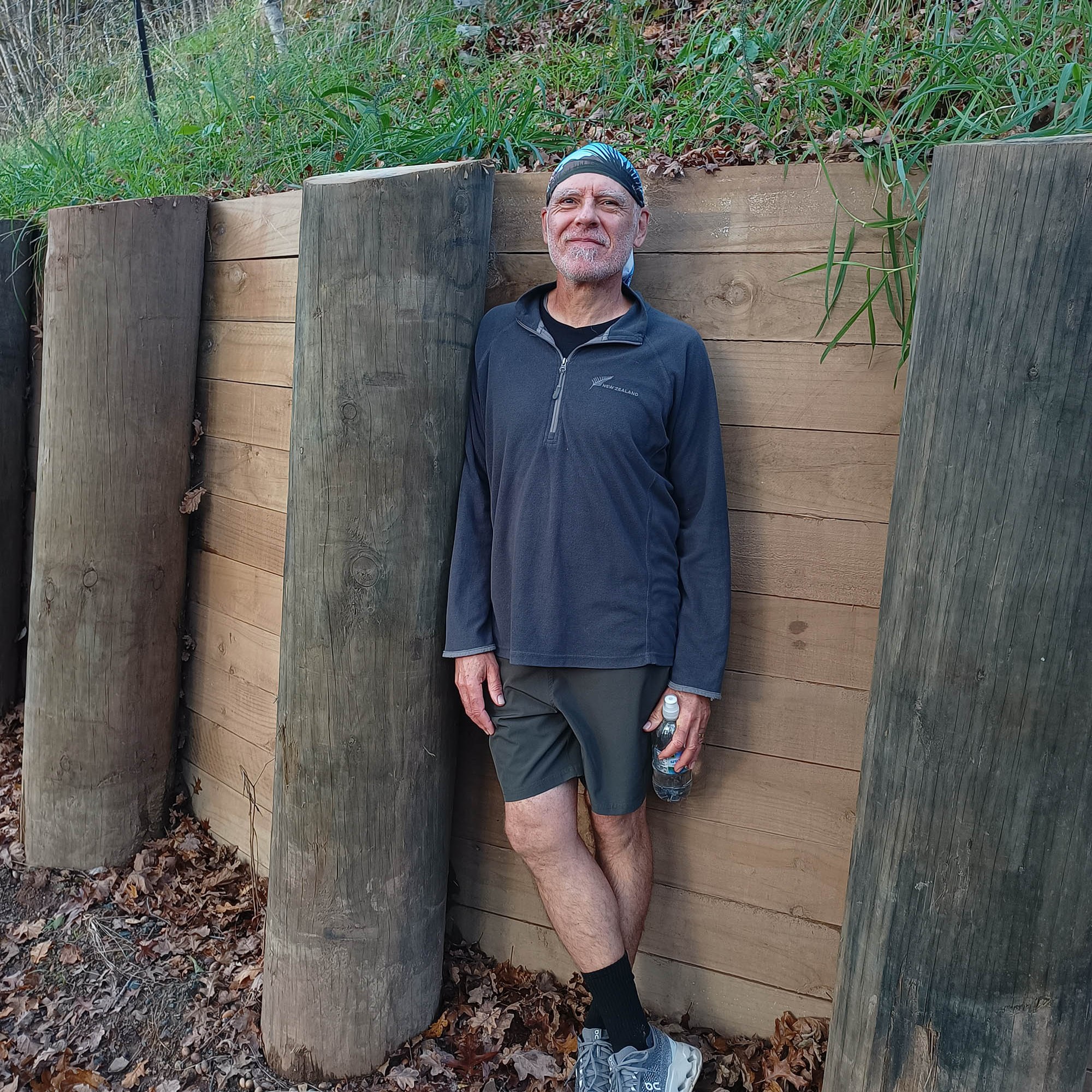
If anyone told me a few years ago that I would do a 100km training run, without it being an official event, I would have said, dream on. Not only is this physically a huge challenge, but also mentally. Getting your head around that distance takes some mind gymnastics. Getting your head around doing it outside of the support, comfort and camaraderie of others in an event, takes extra strong brain gymnastics.

During our 19k’s for 19 days challenge, and the prospect of it drawing to an end, I was concocting another challenge in the back of my mind. Something a bit more challenging. Because, let’s be honest, any abled body can walk/run 19 kilometres a day for 19 days. It might just take some people longer, while others would do it much faster than I was able to. And so the idea of keeping going for 24 hours on the same route we used for the 19k’s, was born.
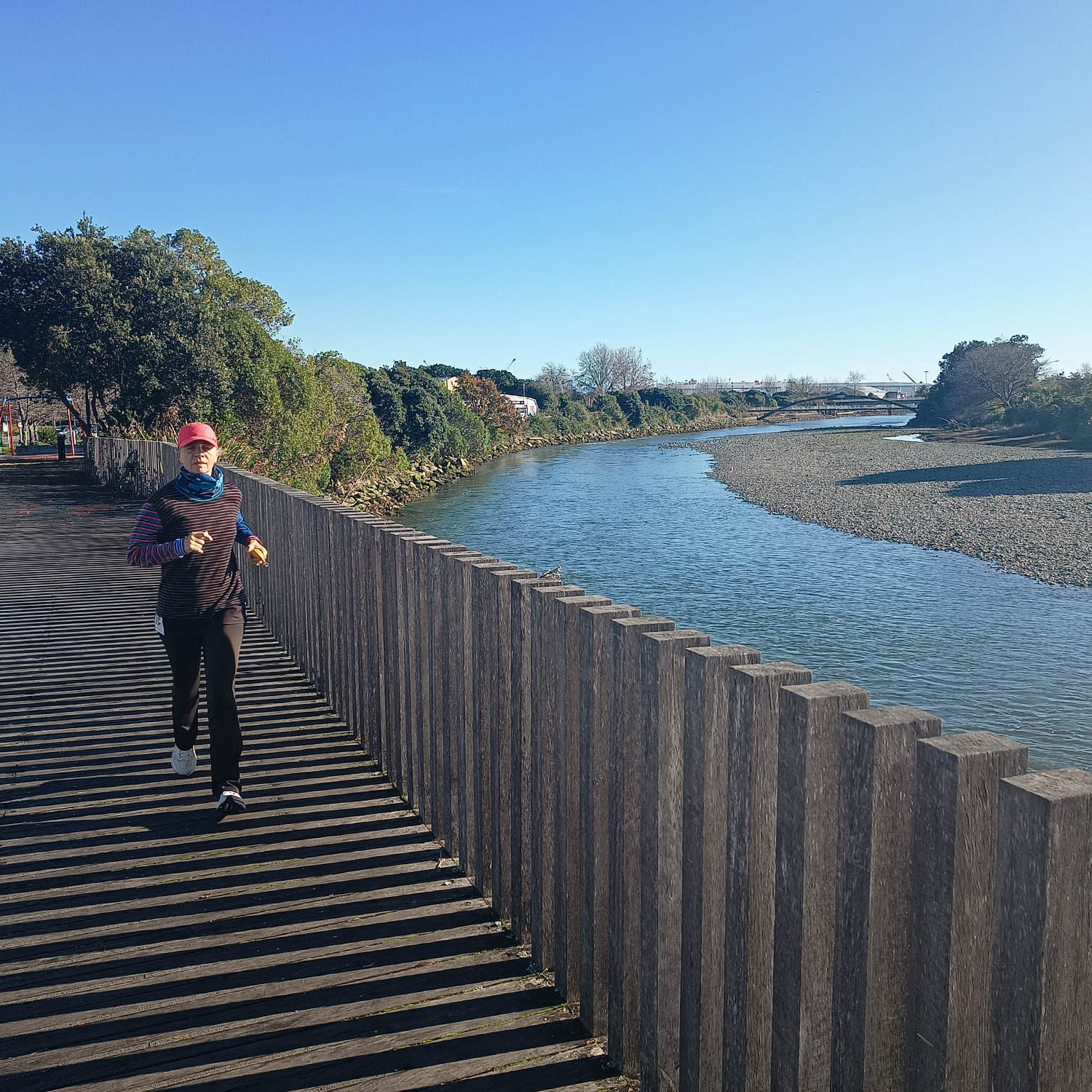
Starting on a Friday sounded like a good idea. We would finish on a Saturday and still have a Sunday to recover from the sleep depravation. Recovering from the fatigue, pain and soreness will take quite a bit longer. I also thought it would make for a good change to do the night shift early on, as opposed to most events where you start in the morning, reaching the night shift when you are already tired, very sore, and your muscles fatigued. Four o’clock in the afternoon would therefore be our starting time.
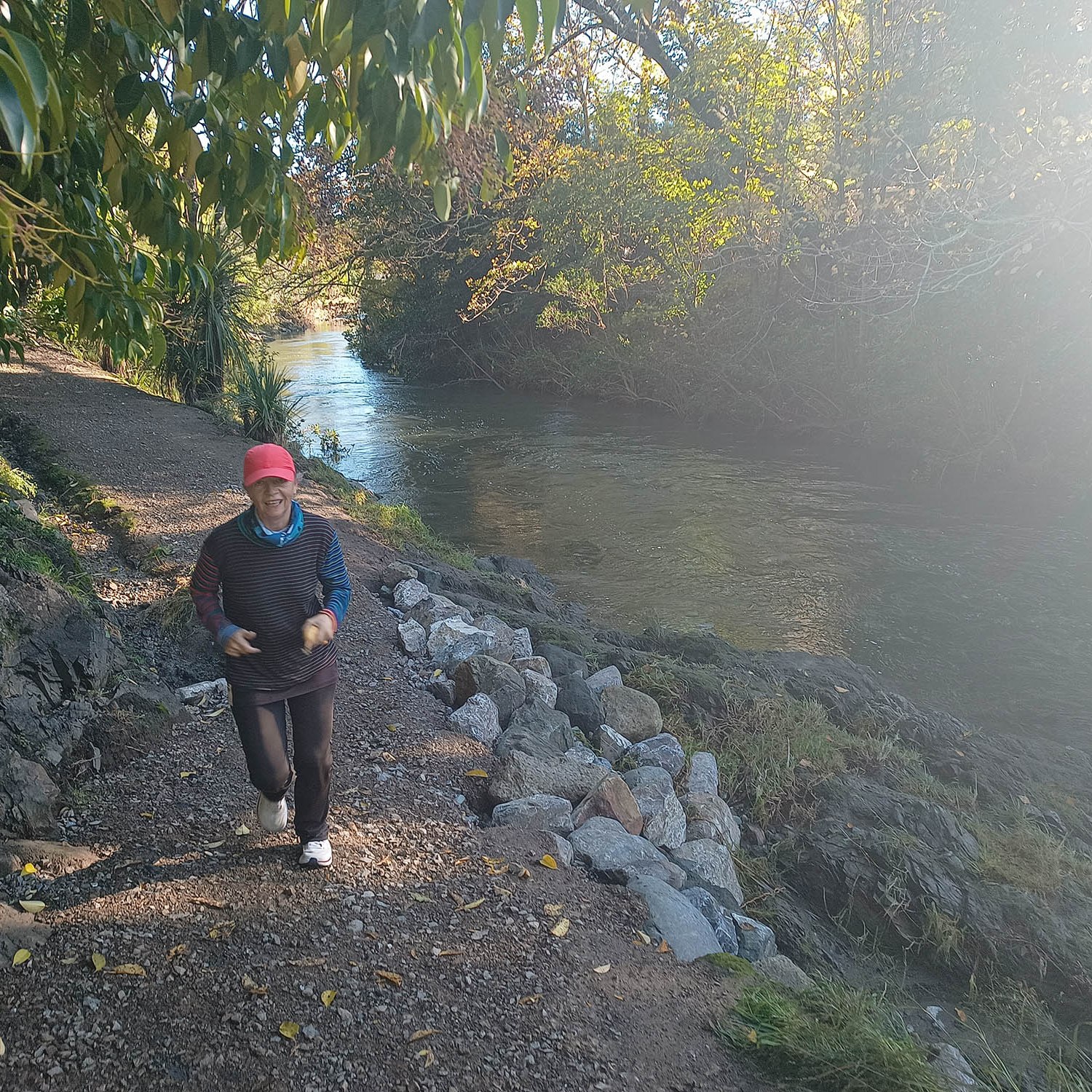
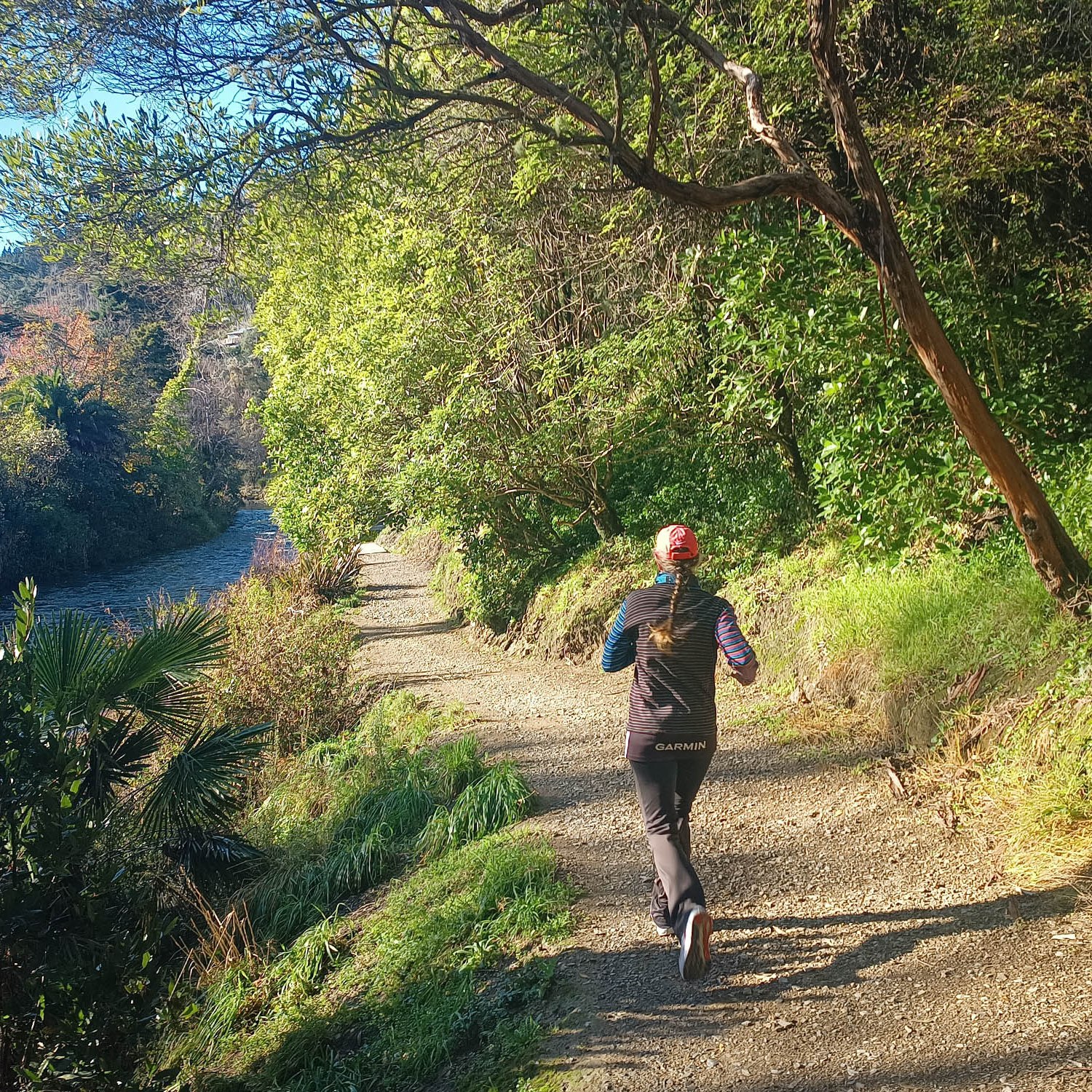
As always, there are lots of things in everyday life that require attention. One of these was closing off the vege garden with bird netting to keep our pesky feathered friends from eating everything I put in the ground. From all the brassicas, silverbeet, kale, and beetroot, to everything else that have green tops. In-between working on the netting, I cooked a pot of soup and boiled baby potatoes as part of our sustenance for the “event”. We were somewhat ill prepared, but figured we have some jelly sweets, soup, salty boiled potatoes, date balls and oranges, and we are not out in the sticks should anything go pear-shaped. At some stage during the night, I remembered we also have potato chips/crisps, a four year old bottle of Coke (which was completely flat on breaking the seal) and sesami snaps. As always, flavour fatigue plays a big part of these outings, so the bigger the variety, the better. However, the soup, salty spuds, and date balls fixed most cravings.
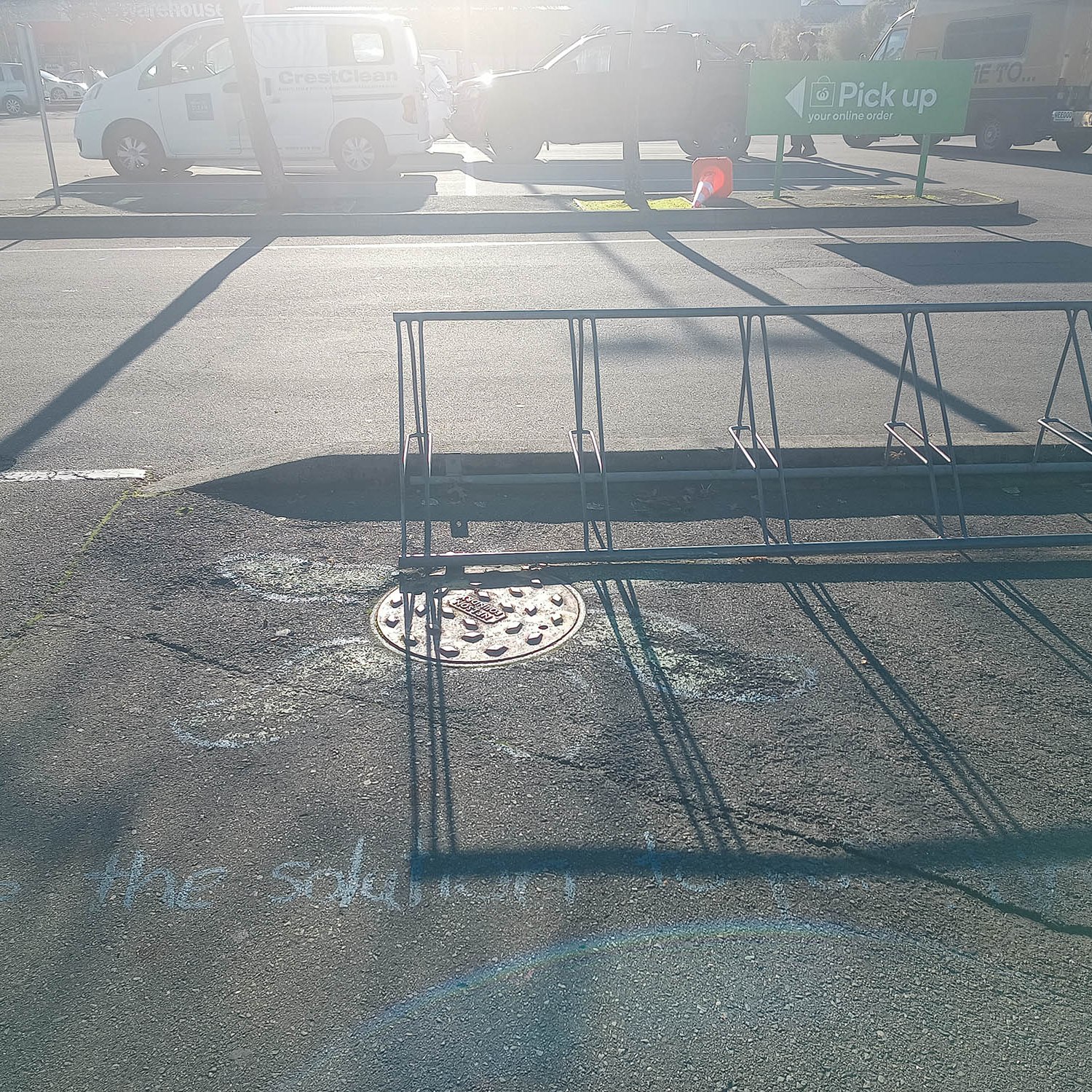
With no time during the Friday to take a nap, we dashed through the shower, and quickly set up our aid station in our driveway for our 4pm start. We had extra warm clothes and headlamps in the back of the car, as we knew the sun would set in about two hours. On the dot at 4pm, Gerry and I started on our 24-hour stint. When we passed our neighbours about 150 metres down the road, we saw all the lovely signs they drew in the road with chalk. Messages like “Go Gerry and Wouna”, “you can do it”, “keep it up”, and “keep going” with stick-figures of a running boy and girl were such a boost. When we turned around at the road-end to come back past their place again, they had a boombox out, Paul was dressed up in his Springbok rugby jersey and scarf, and to the sound of Afrikaans music and cheers from the whole family, we were sent off properly. Of course Paul was having a beer, and I had to wonder if we were being mad given that we could be sitting by a fire and also having a beer on an evening that promised to be beautiful.

We ran some of the downhills and briskly walked the uphills, hoping to keep up the regime for a big chunk of the 24 hours. By 6pm it was almost dark, and we had to start using our headlamps. Partly also to be seen, as we didn’t bother with high-vis vests. Gerry’s shoes were lighting up like nothing else, I had reflective bits on my clothes, and besides, we were in lockdown. There were not supposed to be a lot of cars out on the road. Especially not in our wee area on a dead-end road. It was always going to be a long night. At least twelve hours of darkness lay ahead of us.

With the sun setting, so too did the temperature drop. It didn’t take too long before I had to add some thermals. Gerry donned a pair of gloves which he didn’t take off until we finished.

At ten in the evening, Gerry quickly dashed inside to turn on a small flame under the pot of soup. Two hours later we both went inside, me to put on thermal tights, and to help fetch the warm soup and more rations for the night. With both the soup and boiled water in thermos flasks, instant coffee powder, a few tea bags and cups, we were ready to continue on. We have been going for eight hours by then, so a third of the time done, and a little over a marathon. Up to that point we were still jogging some of the downhills, while walking the rest. But from 12am I was worried about falling and risking an injury, as my muscles were starting to fatigue quite a bit. We ended up walking most of the 16 hours that was left until 4pm on Saturday.

The night was tough, even though we were two people, and always had company. I cannot imagine what the same experience would be like if you were on your own. It was a new moon, and everywhere was pitch black apart from our headlamps. Initially the stars were out and it was a lovely evening. A short bit later, it clouded over, and it became more misty, which made our headlamps glare. 400 metres down the road the stars where out again. This kept happening, coupled with a light wind all through the night. I even had to put on my rain jacket for a couple of laps as a few spits of rain made me wonder about a wet couple of hours, which luckily never materialised. It was one weird night. The fact that we had not slept in however many hours only added to the ominous experience.

At about 2am in the morning, someone, a boy racer perhaps, further up the dead-end road decided it was a good idea to make donuts with his souped-up whatever car. The noise in the dead of night was overwhelming.

We saw a cat, and eyes that could have been a possum. Strangely enough we did not hear a single possum. We did hear some noises which I thought belonged to hedgehogs, but  was not sure.

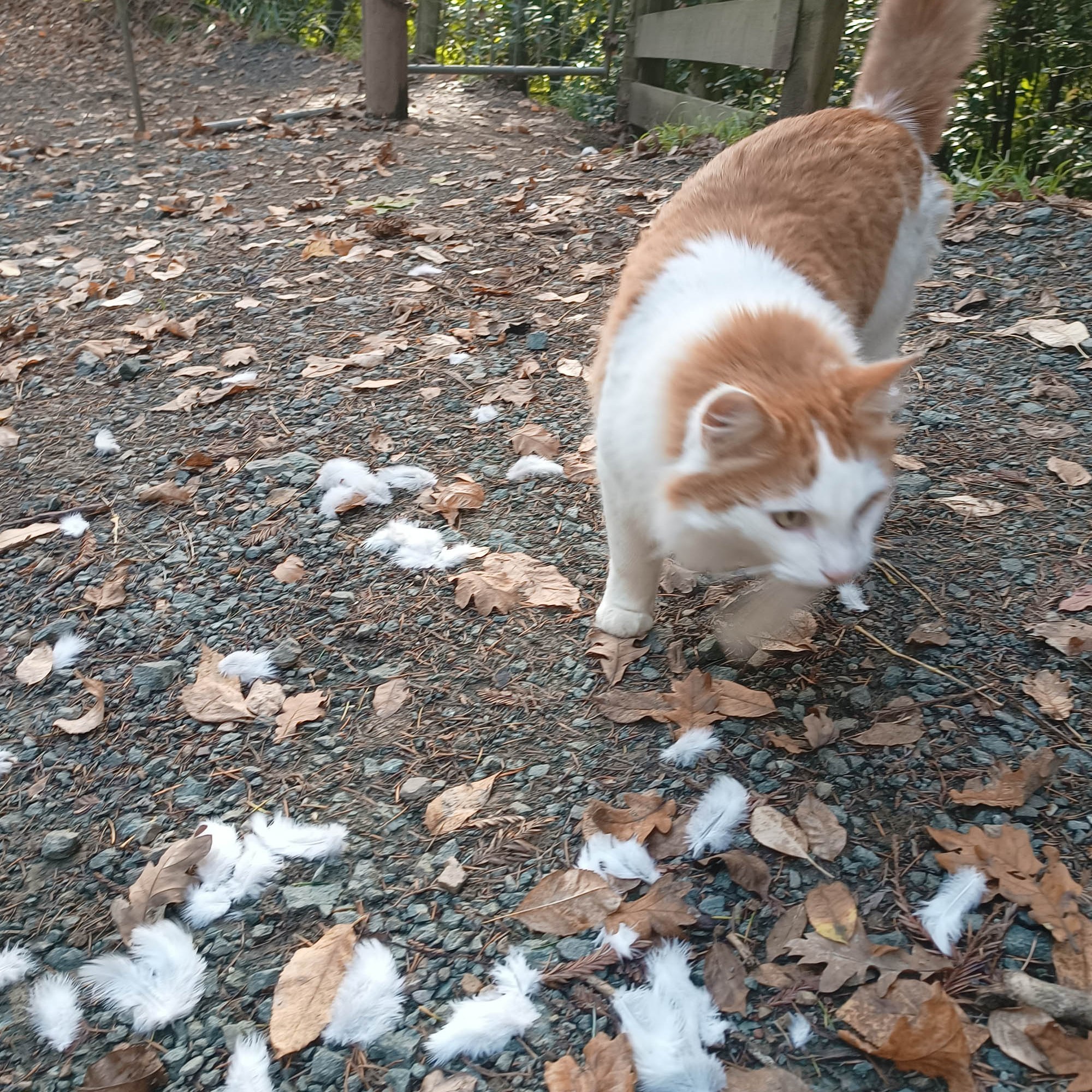
We also have a feral cat. Not that you can ever “have” a cat. Cats have a mind of their own, but we started feeding this cat a couple of months ago. For ten years I have chased the bugger away, thinking it might catch/eat the guinea fowl. By now, the same poor cat has grown old and turned deaf, and it is still around, skinny and looking worse for wear. It always hangs around our place, presumably because we do not have a dog or some such to chase it away. I started feeling very guilty and sorry for the poor sod, as it obviously is in no condition the catch or kill a guinea. At some point during the night, said cat decided to sit next to our black board on which we counted our laps. It was watching us going back and forth, up and down the road for a few laps. Gerry decided to give it some food so that it can be on its merry way, so we did not see it for the remainder of the night.

We tried to keep up our sustenance and eat as much as possible. That is the only way to keep your wits about you during extended, exhausting, excursions. The occasional quick stop for a hot cup of coffee, tea or soup was much needed. We did not want to venture into the house too often, to minimise the agony of having to go out in the cold again. Hence the thermos flasks outside. To get up and keep going after sitting for a few minutes, was hard to say the least.

I thought it would be daylight by 6am, but unfortunately it was still dark. For twelve hours I had been looking forward to daylight again, only to have to wait another twenty or so, agonisingly long minutes. Eventually, the horizon started to turn light, and soon we could leave our headlamps behind. The wind picked up a bit, and only got worse through the day. It eventually turned into a rather dreadful, gloomy, windy, cold, and a few spits of rain-kind of day.

Shortly after 8am, Paul was in his driveway with a cup of coffee, cheering us on again. With it being daylight we started jogging the downhills again, but I noticed that I was much slower. After a couple of laps of trying to jog, we gave it up for a bad job and walked all the rest. By then we knew that if we can just keep going, albeit slowly, we could make 100k.

Since the challenge has always been to keep moving for 24 hours, and not to cover 100km, there was no reason to get to 100k any quicker. Early in the process I briefly considered aiming for 120k, or so, but I soon realised that that would be a bit ambitious, giving my current fitness level.

By 3pm we had done 100k. The urge to stop was rather strong, but we kept going slowly and managed to do a couple more laps, with some stops in-between. We even made, and walked with coffee a couple of times, we were going that slow.

And to finish off with a bang, our neighbours again made a big fuss. It was fantastic to have their support all day, checking in on us, chatting bits and generally encouraging us to keep going. The girls had a rope across the road, while Paul played Chariots of Fire on his pod. Katy prepared a lovely lasagne for us for dinner, and even dropped off a bottle of wine while we were doing our last lap. We could not have wished for more.

By the end, we had not slept in over 33 hours. While the lasagne was heating in the oven, I took a warm shower to try and heat up my frozen bones. Since sunset the previous day, I had not warmed up for 22 hours, despite three to four layers of clothes, beanie, and buff.

We poured a glass of wine, ate a delicious meal, and went to bed at about 9pm. Happy and content, but not sure how I was going to be able to get out of bed the next day. Everything was sore, but sleep was oh so good.

19 k’s for 19 days – a COVID-19 isolation odyssey

Date: 1 – 19 April 2020
Distance: 362.5km
Time: 52:56
Elevation: 8970m

Screen Shot 2020-04-23 at 6.42.04 PM

In the weeks leading up to the Level 4 lockdown in New Zealand, when everyone was stockpiling on toiletpaper and flour, my thoughts were focused elsewhere – to come up with some sort of physical challenge that would reflect a small part of the pandemic. And since running and walking is my preferred exercise, the plan would have to involve one or both. With 2019 being the year that the virus was first detected (hence COVID-19), nineteen had to have prominence. To just run/walk 19km is no challenge. Any abled body can do that, even if it takes you all day. The logical next step was to try and repeat the 19k for 19 days in a row, and just like that, the challenge was set. To make the challenge just a wee bit more challenging, I decided to try and do every day’s 19k in under three hours. That is rather swift walking if you are not a speedwalker, or a couple of kilometres had to be jogged.

19k-3s

Photo credit © Gerry le Roux

To give us some time to get our heads around the prospect, we opted to start on the first of April, instead of on the same day that the lockdown started (26 March). The lockdown was set for a month, so this challenge would fall in the middle of that timeframe.

We live on a lifestyle section, a small-holding if you like, just outside Palmerston North in the foothills of a windfarm. The location is important to note as, with the windfarm literally in our backyard, we not only have hills, but we also have a fair amount of wind. Not necessarily always gale force winds, but persistent wind. Our tiny house of 45 square metres is right on the corner of the property. Our property is also located on the corner of the dead-end road, that leads to the other properties in the area, and a right-of-way  (ROW) housing three neighbours next to us. Being on the corner, it is a ninety-degree angle with the one leg leading to the Pahiatua Track, a road that connects the east and west sides of the Tararua Ranges, and the other leg that runs down the ROW.

The corner is at a high point with regards to the elevation. In either direction there is a little valley, before an uphill at the end of each leg. It is therefor a case of starting high, go downhill and up again, before turning around, and repeat. Both these legs are the same, both going through a dip and up again. The one leg is 350 metres and the ROW about 400 metres. To keep within the government’s rules to stay local, we opted to do only this stretch in our area, 750 metre in length which we had to repeat 26 times every day.

Since we have not been running all that much over the past six months, we had no intensions of trying to run everything. We have, however, walked lots since the beginning of the year, with only the occasional kilometre or two of jogging thrown in just to feel what it is like. My hips are still on the edge, often in the dumps, and while I still try to get a handle on things, I figured that walking is a good idea. We covered six to seven kilometres most days since the beginning of January. In order to utilise this challenge to make the transition back to running quicker, we tried to jog the downhills and walk the uphills. The first day we did exactly that, and jogged about 9km, but I was somewhat sore the next day. The second day ended up being a walking day. As was the day after that. Quickly both Gerry and myself had shin issues from all the fast walking. To combat these sorts of aches and pains, we spent 15 minutes every other day in an ice-bath. This is really just a 200 litre drum in the vege garden, where we store some of the overflow water from our small hothouse tanks. These ice-baths seem to have done wonders. Although, one could argue that it was perhaps my imagination and the belief that it had to magically help relieve sore muscles.

As you can imagine, every nook and cranny of the road quickly became intimately familiar. But every day there was still something new to notice, or someone new to meet. Most days we had to explain to someone what we were doing. Most of the time, their reactions said everything about what they thought of the challenge, and us!

Every day brought its own challenges. Sometimes it was the weather, other times you just don’t feel it, and still other days you have a headache or something else that adds to the challenge. But that is the whole point. Mental challenges are often far more difficult than physical challenges. The will to sit on the couch and watch movies far outweighs putting yourself voluntarily through hardship. Especially if the discomfort is self-inflicted. To stop at 19k every day, was mentally another challenge altogether. If you cover 19k, you may as well do 21.1k. It will sound so much better if you do 19 half marathons in a row. But 19 it was, so 19 we did.

Over the course of the 19 days, we covered the 750 metre stretch 494 times. After a few days of mostly walking, we started running the downhills again, and managed that most of the time. We got rained on three times, once completely drenched. In the final week we had a lot of wind, often a head wind down the ROW (the prevailing Westerly). But mostly the weather was near perfect. Autumn truly is New Zealand’s best season.

The 19 days went past so quickly, and in the final few days I couldn’t help but wonder if we should set ourselves another challenge before the lockdown gets lifted. As is always the case, once you achieved something you need something new to fill the gap.

It is the curse of an endurance junkie.

19k-1s

Photo credit © Gerry le Roux


Taihape Gumboot Gallop recce

Race day is getting closer, and I was keen to experience the course myself first hand before the event. Curious to know what the terrain would be like underfoot and how hilly the hills actually are. We were also in need of elevation maps. The plan was to walk the whole course, which I figured should take me around three and a half to four hours. I ended up jogging two to three kilometres.

We left early from Palmy for the hour and a half drive to Taihape. Actually, as opposed to previously when the event was still organised by someone else, the course is now about seven kilometres south of Taihape in the Utiku area. At the Gravity Canyon turnoff to the right, to be precise. Just across the Mangatainoka Gorge the first right takes you to the start of the event about 400-500 metres up the road. There’s two paddocks of which one will be used for parking and the other for the race base, the gumboot gallop dash, et cetera.

Instead of parking in front of the farmers gates where the actual start/finish of the event will be, we decided to drive up the road to park at the bottom of the paper road. This meant that we would have to adapt the resultant elevation map to reflect the true course.

21.1km & 12.8km course maps

maps12_21s

21.1km course profile

half_profile


12.8km course profile

12_profile

The sun was already high and the mercury was rising. The patchy clouds weren’t enough to protect us from the blazing sun.

We started off on a slight downhill on a gravel road going towards the actual start of the event. I found the gravel to be fairly coarse in places, but in the car tracks it was fine. After a short walk we met the first farmer. We introduced ourselves and after exchanging some pleasantries we were on our way again. Up ahead we could see the downhill gravel road winding through the hills making a little jog seem appealing. Since the middle of October I haven’t gotten back into running again, apart from the odd kilometres here and there during our walking regime since the beginning of the year. As a result of this, jogging suddenly felt a bit strange. I felt out of shape, bouncing all over the road without rhythm or rhyme. If a sack of potatoes could run, that would aptly describe my style.

Let me explain. Our last running event was the Wairarapa Country Half where, apart from a host of other issues, I also developed severe pain on my left hip bone. My immediate thought was that it must be a stress fracture. I never had it checked out and we stopped running altogether. The pain felt similar to the pain I went to see a physio for on the right hip which just opened Pandora’s box resulting in a cascade of issue and to finally be diagnosed with FAI (femoral acetabular impingement). I had an inkling that the outcome might be the same, so opted to not go through the motions.

As the days and weeks went by, I felt fatter, got unfitter, ate too much junk, and was generally just not going in any direction I wanted to see myself going in. Usually when this happens and all else fails I find a backpacking trip into the wilderness very helpful to bring some perspective. So we took the plunge and ventured into the Tararua Ranges over New Year.

Getting back home after the five days on the second of January and realising that we started the year off by walking eight or more kilometres each day, I got the idea that maybe this is something I can try and keep up. Eight kilometres is a bit of a push and being partial to the number seven we rounded it down to seven. For the most part we’ve kept it up so far, but there are some days that it is just impossible to get all the kilometres done. During February we decided to introduce some jogging back into the regime and started running one of the seven kilometres. We only did this a few times before this recce, so running or jogging is not part of my reality at present.

We made arrangements with the farmer who’s property we would be crossing, and after we passed the real start we turned right to follow Gorge Road uphill to the farmer’s property. On the way there he rang Gerry and said he will meet us when we pass his house. A kilometre or so later we passed his gate where he was sipping on some coffee and also offering us a cuppa which we reluctantly and politely declined. We still had a long day ahead and if we started having extended breaks so soon already, we might not get going again. Some quick introductions and a chat before we carried on to turn right onto the gravel road from where we would cross his land. He met us again at the gate on his quad bike as he and his brother (whom we also met later) had to move some stock.

The paddock was hard packed and dry. The drought is claiming its toll and the farmer informed us that his sheep will have to go to the works earlier than normal, as feeding is becoming increasingly challenging. Passing a couple of mostly dried-up puddles, the sheep were standing in the mud to get some relief from the heat. When we were checking out the course towards the end of last year these puddles were still little dams.

This section is mostly flat. Mt Ruapehu is visible on these higher parts of the course and in all directions the hilly farmlands frame a pretty picture.

When we reached the top of the paper road it looked far down to get to the bottom where the road switches back. Turns out it is not as steep as I thought it would be and was quite runnable. Gerry charged down and I trotted along on the couple hundred metres downhill. Once you get to the switch back at the bottom the downhill gets more gradual.

Back at the bottom of the paper road we passed the car and stocked up on some provisions for our second lap. At the fork at the bottom of the gradual, fast downhill on gravel road we turned left to take on the gradual uphill back to the top at the farmers gate. By then we were approaching the warmest time of the day. A farmer came driving past while we were checking out the views. Suddenly I caught something in the corner of my eye. It was none other than a couple of bulls on a little ridge next to the road. They were on the wrong side of the fence, and while I was frantically scouting for a fence to jump should they start charging, Gerry called one of the farmers on the road. Turns out the cattle were grazing the “long acre” and was meant to be there. When we drove by afterwards we noticed three bulls still calmly standing in the shade and swatting at flies with their tails.

Our second time through the farmers property and down the paper road went smoothly and I tried to jog little bits of the downhill where possible. Back at the car Gerry dropped his pack to run to the actual finish, while I drove the car back to pick him up.

The final section back on the road has a nice little climb, but also good shade among the tall trees. Sheep were huddled up under a tree to find some cool relief from the sun.

Although varied terrain might not be to everyone’s taste it is an event that I won’t mind doing. It is social, has varied terrain, great views, and should be a fun day out. Fingers crossed for good weather – not too hot, not too cold, and just the right amount of wind to cool down the runners and walkers.


Powell hut and back

5-6 February 2020
Distance: Approximately 18km out-and-back

At short notice we, together with friends, decided to make the trip up to Powell hut, spending the night and walking back down the next day. Since Waitangi Day was on the Thursday, we decided to make a midweek outing of it, hoping to have the hut to ourselves. This turned out to not quite be the case.

Our friends arrived from New Plymouth on the Tuesday night. By then I had started sorting out our food and making piles of things to take along. Luckily the hut has gas cookers, so we need not carry our little stove and fuel. It is also a new hut (6 months old) which is well insulated and has a fire place so we went for our thin little sleeping bags. I call them sleeping bags, but they might actually rather be a thin down inner of sorts?

The forecast looked okay-ish. A light drizzle in the morning was predicted, to make way for clear conditions the next day.

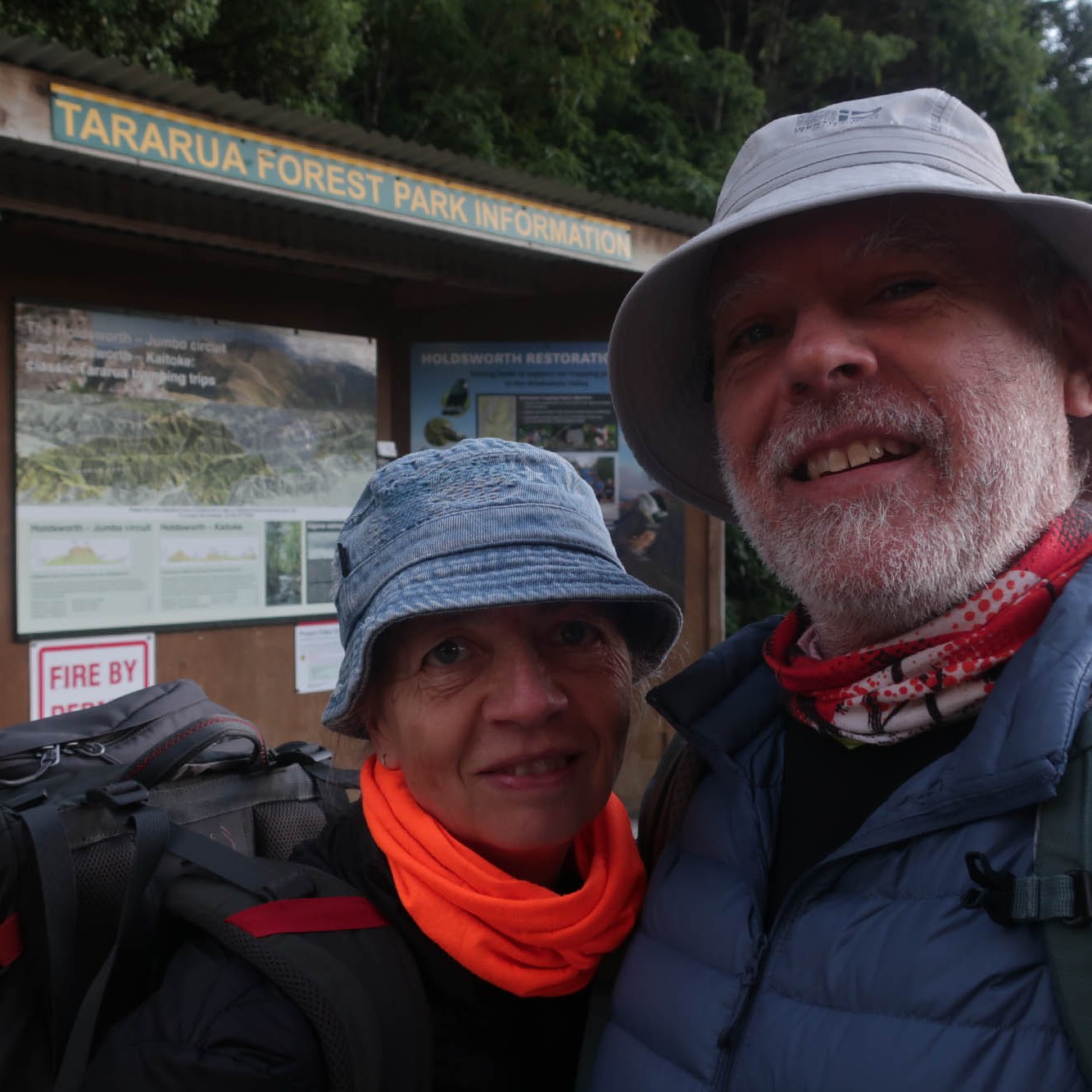
We left from Palmy a bit after 8am to arrive around 9:30 at the Holdsworth campgrounds. A last cup of coffee (this seems to have become habit) and a trip to the toilet where we also filled up water bottles. It was on the cool side and we all donned rain jackets. Luckily this could be packed away soon after we started, but the cold breeze stayed with us all the way up the mountain.

We were all carrying smaller packs (around the 32 to 40 litre size; mine was actually a 24 litre and way too small) and wearing trail shoes, which makes the going far easier than having to do it with a heavy pack and boots. There’s obviously a place for these, especially if you go into more rugged terrain, mud, ice, wet and cold conditions. I cannot imagine how cold a pair of trail shoes will be in snowy conditions, or after a stream crossing and an ice cold wind. Trail and running shoes are often purposefully made to be more aerated to allow air to cool down your feet, and water to disperse through the fabric. Exactly what you don’t want on top of a mountain in adverse conditions.

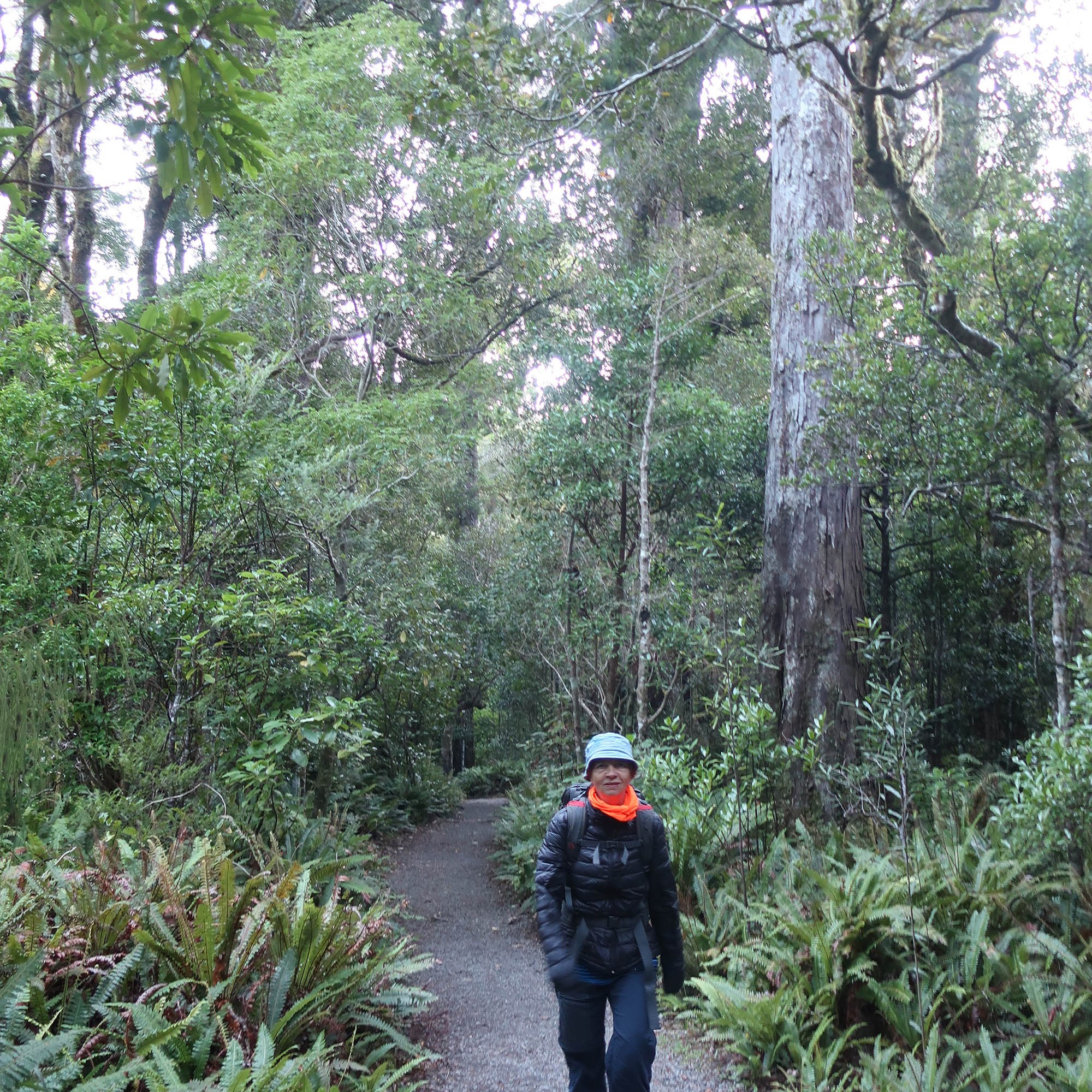
Following the gradual incline over the Gentle Annie Track we passed the Rocky Lookout. It was still cloudy so we couldn’t see the hut high up above.

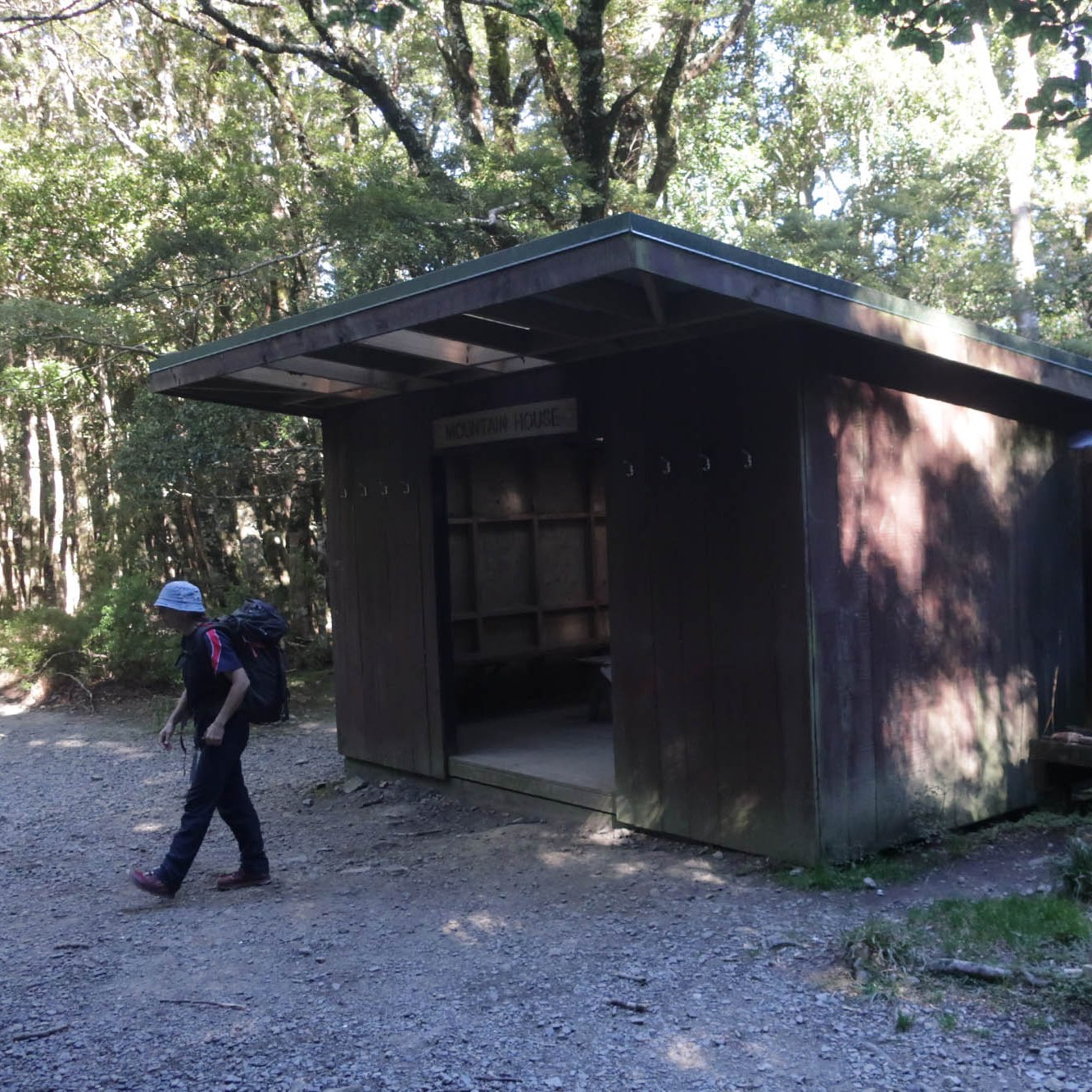
At the Mountain House shelter we stopped for lunch. While sitting there and reading some of the comments written on the walls, another group of three sauntered in, also to have lunch. They planned to go up and back down on the same day.

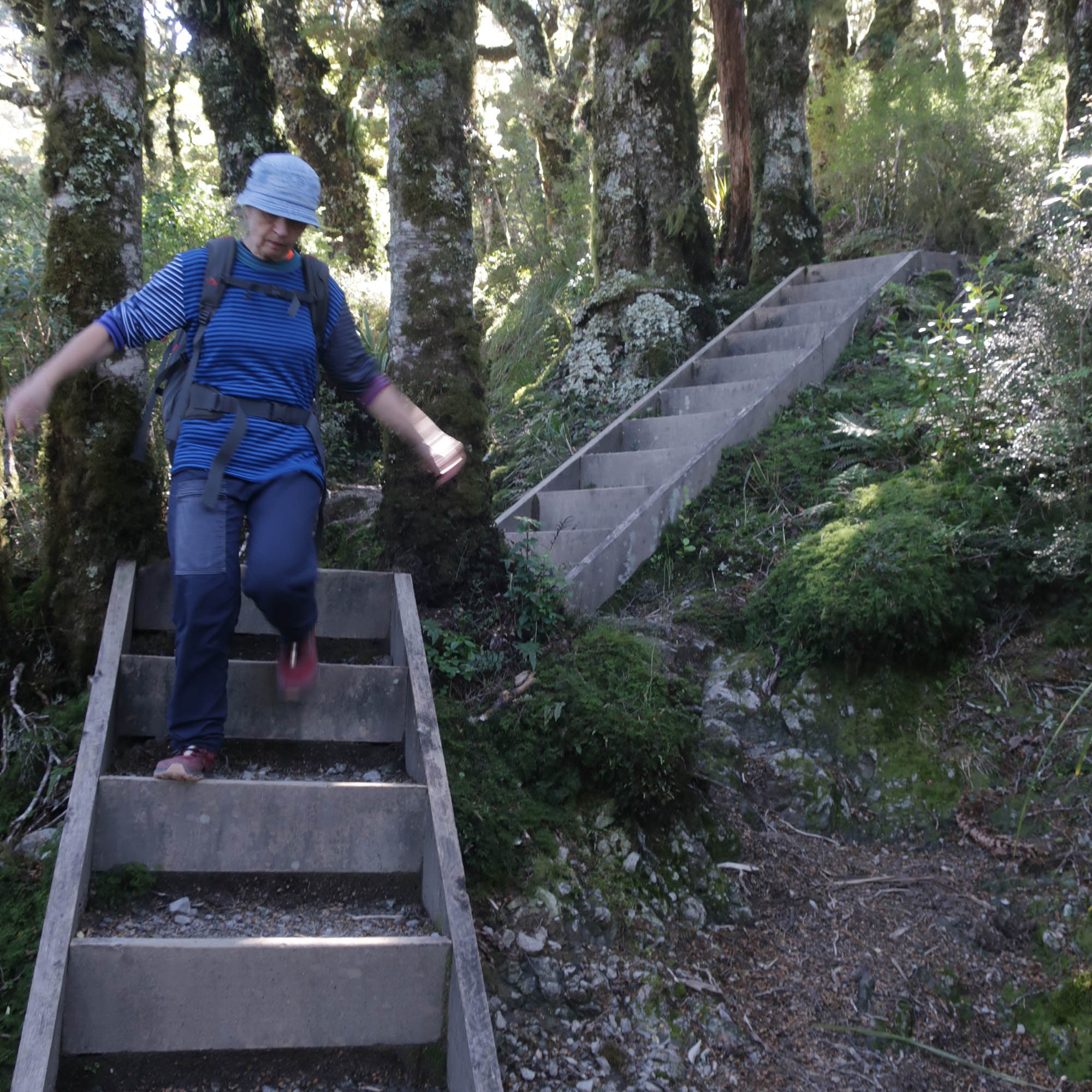
We passed the turn off to Totara Flat hut, across Pig’s Flat where we eventually reached the point where the final and steepest couple of kilometres of the day began. Some really big steps are a test of one’s quad strength and capabilities, and I’m disheartened to say that I’ve lost quite a bit of strength in that department. It is a good reminder that I need to do something about my muscle strength before I lose it all.

Arriving at the hut around mid-afternoon we made some coffee and soup. It was a few degrees centigrade colder than at the carpark. A couple that was there already, but who was out on a walk when we arrived, had returned and not long after another pair arrived. We were playing rummy and later still poker while sipping on bourbon, waiting for the clouds to subside so that we could see a bit further than the porch. It was also getting colder. Shortly after 5pm I lit the fire. In stark contrast to our previous Powell hut experience (which included a bunch of kids) everybody was quiet and mostly kept to themselves.

It was still light outside when every now and again the clouds would tease us with a slither of blue sky, just to close up again. All along the valleys below were covered in clag (I thought clag was mud and the right word is murk, but it turns out everybody in NZ talks about clag when they talk about mist or low cloud). We cooked dinner (vegetable curry and sipping on bourbon for us, and pasta with a glass of pinot noir for our friends) and ate far too much! I over-catered by about three people and the two of us ate it all. Another tipple to wash it down followed by salty caramel chocolate. When I went to the room to fetch the chocolate, I discovered with horror that the big window in our room had blown wide open and an ice cold wind was undoing all the warmth produced by the fire.

At about 11pm we were ready for bed. Lying in our sleeping bags (with polyprop top and bottom, socks, beanie and a thin down jacket in my case) contemplating life and listening to the wind tucking on every nook and granny of the hut we were hoping for clear skies and less wind come morning for a trip to the trig.

As was the case the previous time in this hut, by about midnight a couple of people entered the hut and started looking for a place to sleep. In the 32 bunk hut, we were only eight, but we occupied all four the rooms in pairs of two. One of the late comers decided to sleep in the six bunk room with our friends, while the other spent the night with our neighbours in the other ten bunk room.

In the morning we were treated to a clear day. Unfortunately, the wind was still blowing a gale. We made coffee to have with our breakfast, and started adding pieces to a puzzle that someone left there for everyone’s enjoyment.

After breakfast we went for a walk uphill, but only made it to the first signpost, a short walk above the hut. Some slips and narrow ridges to negotiate in a gale proved too much for my frail nerves so we opted to turn around. I’m not good with wind or heights at the best of times. Combine the two, and you have me whimpering back to shelter faster than Joshua Cheptegei can run a 5k.

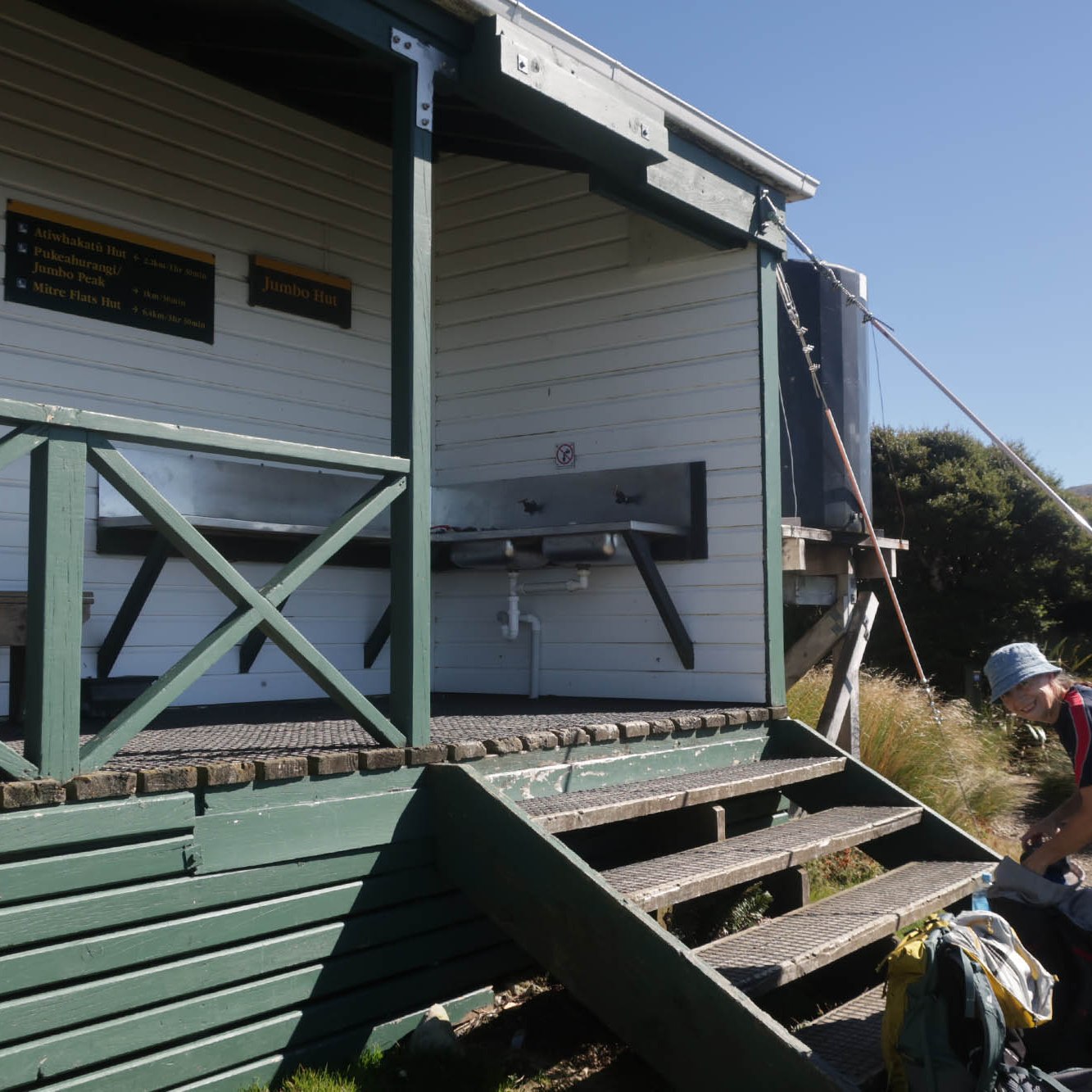
Back at the hut we made another cup of coffee while day walkers were starting to reach the hut. Two of them were none other than the pair of marshals (from Search and Rescue) who were also at the hut for the Jumbo-Holdsworth race two weeks before.

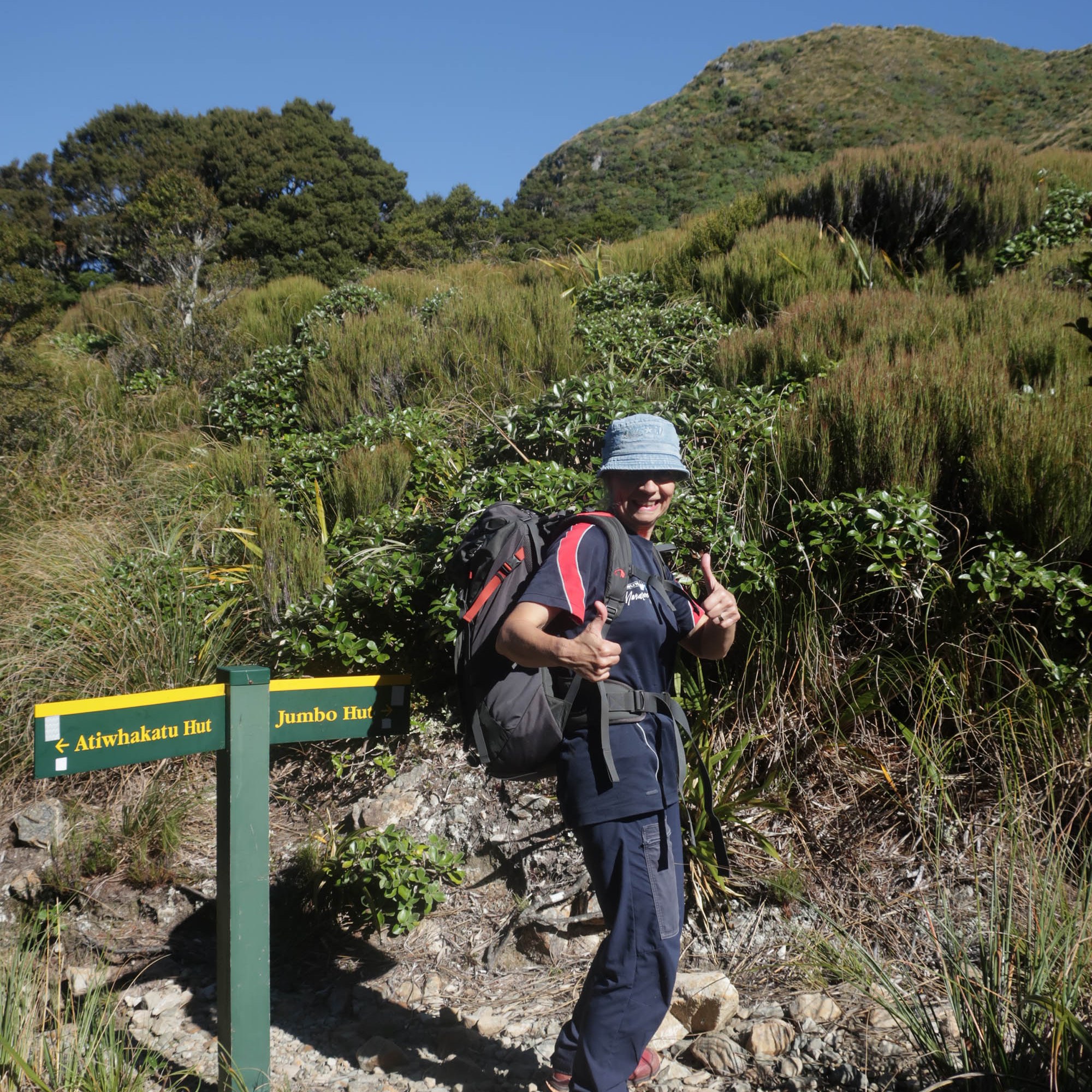
We packed the last of out stuff to start the trip back down. Since it was Waitangi Day the track was very busy with lots of people on day outings to the hut or trig, or across to Jumbo hut. A huge group with a lot of kids was on their way to spend the night at the hut and I thanked my lucky stars that we didn’t have to endure a million noisy kids cooped up in a hut with nowhere to go.

At the Rocky Point lookout we stopped for lunch. The platform and rocks were all packed with walkers and we even met a lady who, upon seeing Gerry’s Tarawera shirt, struck up a conversation. Turns out it was Kerry (SQUADRUN head honcho)’s mom.

By then the sun had come out, and nearing the lower parts of the mountain it was very hot. The last few kilometres back to the car were luckily mainly in the shade. Lots of picnic-goers were making use of the lovely day, swimming in the stream, taking dogs for a walk, or spending the day at the camp ground.

Back in Masterton we bought some water and cold drinks for the road before heading back to Palmy. A quick in and out and lovely to be able to share it with friends. Here’s hoping we can do many more such trips in the months and years to come.

Marshalling on Mt Holdsworth (Jumbo-Holdsworth Trail Race – 25 January)

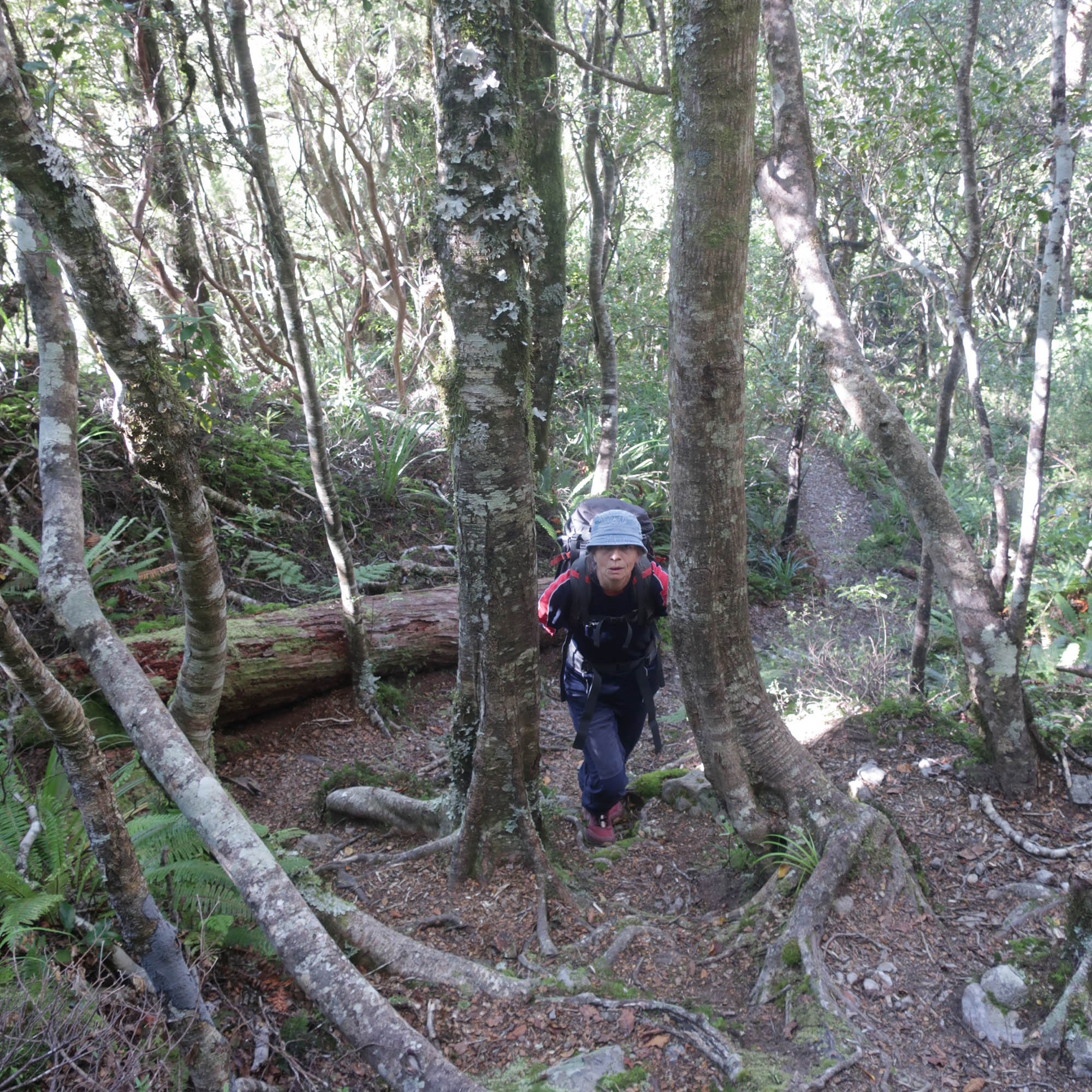
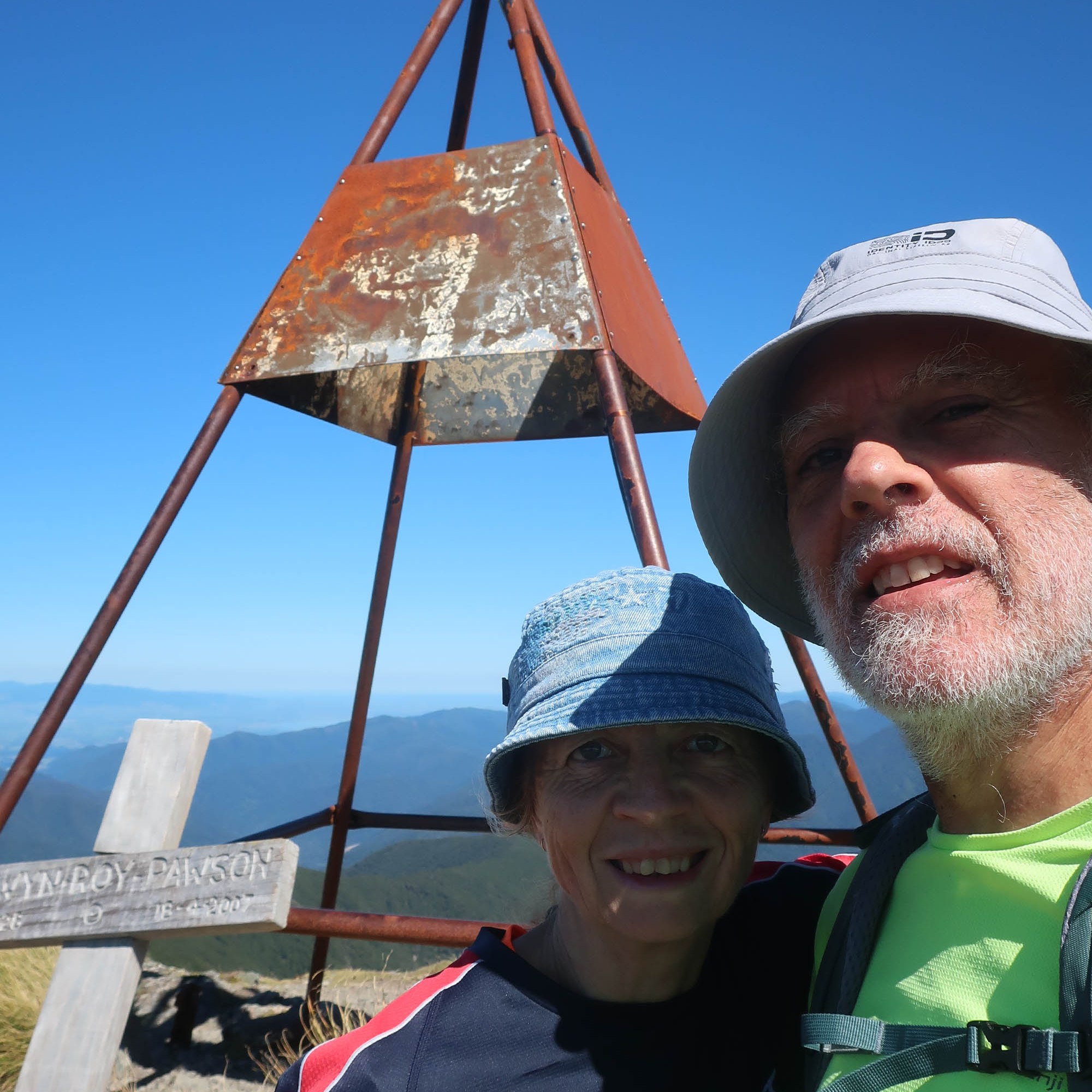
24 January: Powell Hut via Gentle Annie, Totara Flat, Pig Flat and Holdsworth Track

The month of January is not even finished yet and I already felt like I needed a holiday. Luckily we had the prospect of the two days back in the Tararua Ranges. Since our tramp over New Year I’ve been keen to get back in the mountain, but on “easier” and more “human friendly” terrain.

We ran the Jumbo-Holdsworth Trail Race in 2018 and thought it would be good to come back and experience things from the other side. At the time we ran it I thought the volunteer at the top of Mt Holdsworth (1470m) had the best spot and when we put our hands up to volunteer there this year, race director Andrew confirmed that it was available. Staying in Powell Hut the night before the race meant we could turn it into a little mini holiday.

As with a multi-day tramp, you have to be well prepared and pack for all eventualities. Apart from less food, all the normal paraphernalia have to go in the pack. Being only one night and two days, so one will definitely not die of hunger, and therefore staying warm and dry gets priority.

After collecting the first aid kit from Andrew just outside of Carterton, we were on our way to the Holdsworth campsite, arriving just before 10am. A quick sign-in at the lodge and we were on our way.

The track was quite busy and we had a good few chats with other walkers. There were quite a lot of people doing out-and-back walks and runs to the hut, or the trig, or over to Jumbo and down that side, or the other way around. We also encountered a few families with kids on the route making their way to the hut.

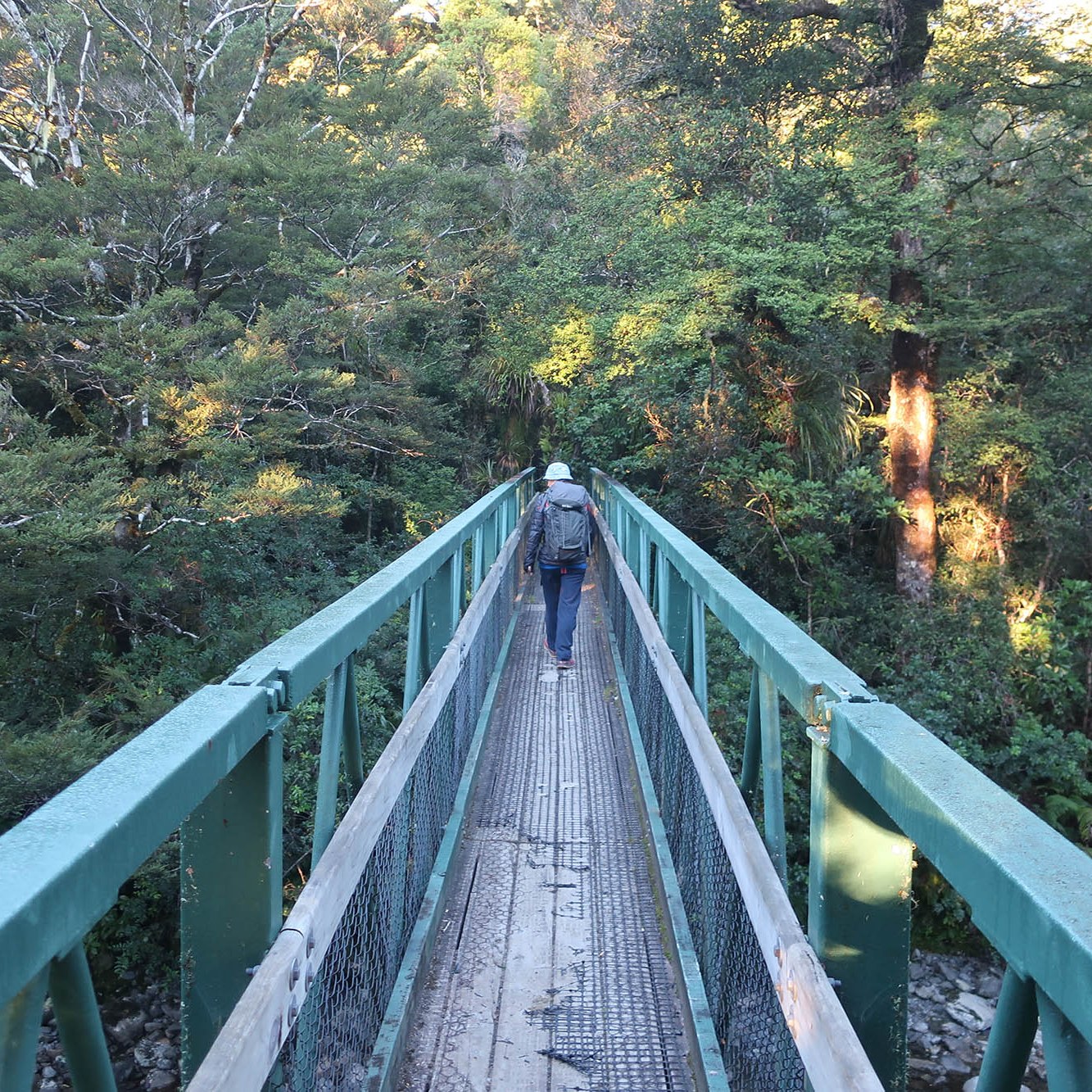
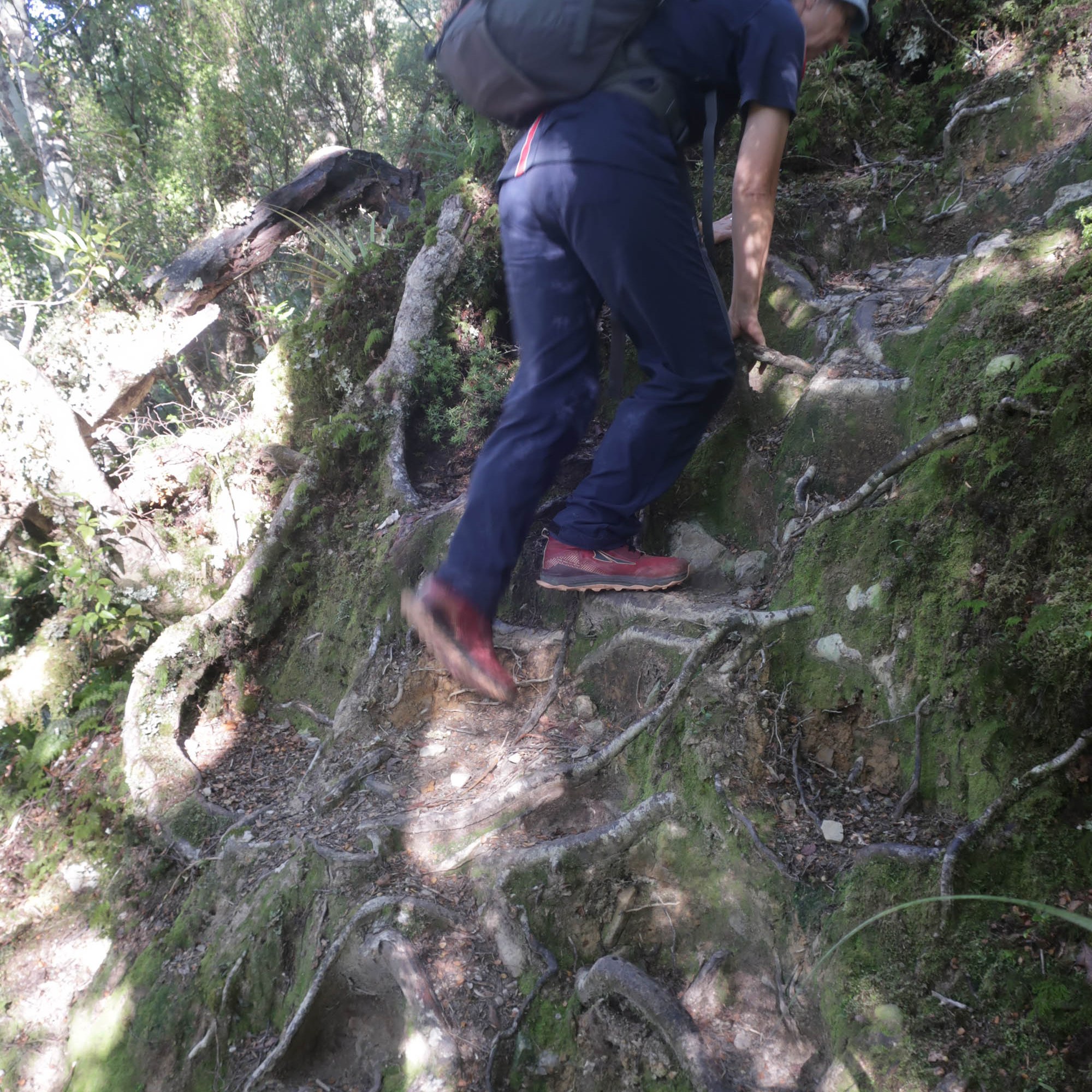
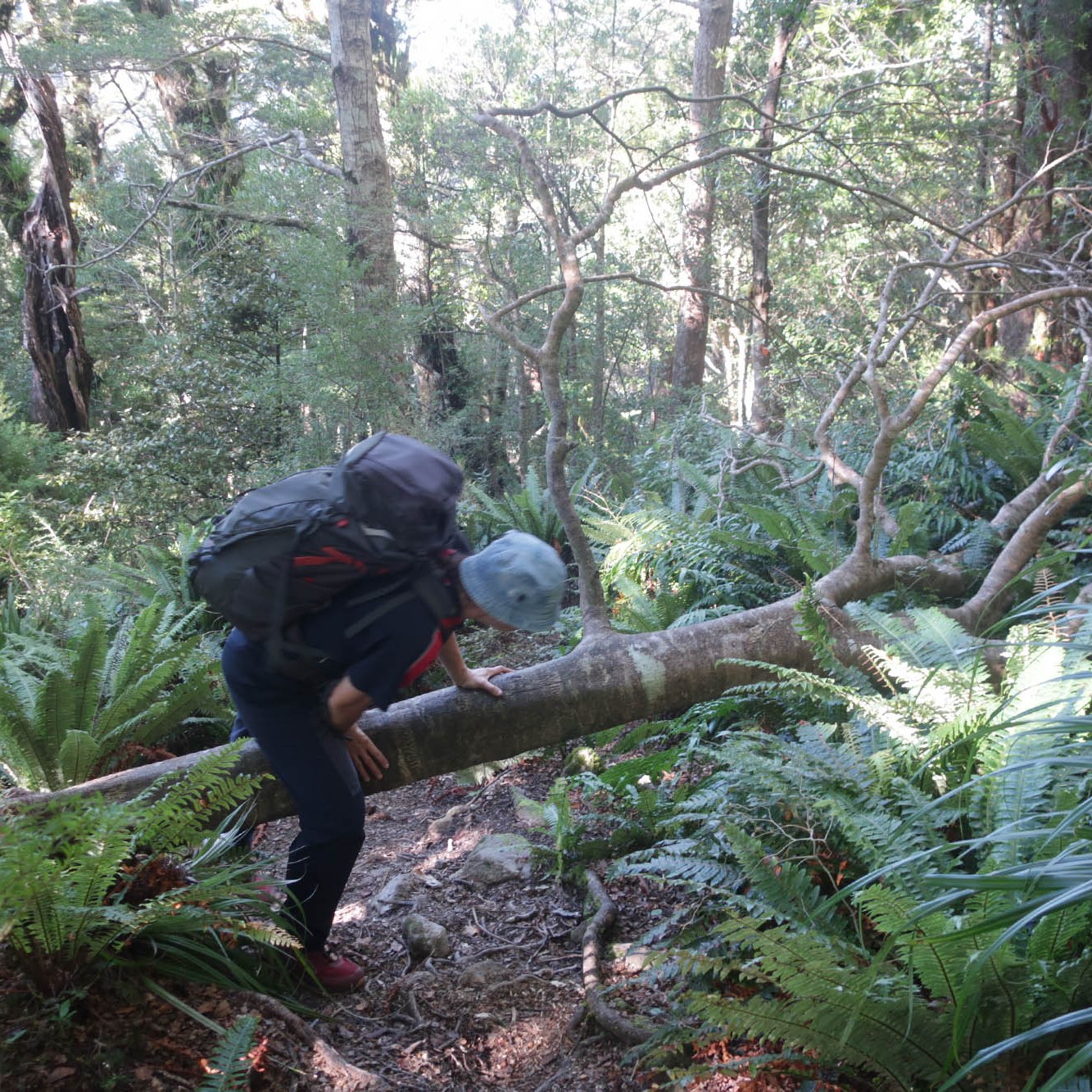
The first section of the walk follows the Gentle Annie track which is a gradual uphill to Rocky Lookout from where (on a clear day) you can see the hut (actually, apparently both huts – Powell and Jumbo). Totara Flats is about 3km from the carpark. After Totara Flat, Pig Flat is a boardwalk leading to the Mountain House Shelter. On route there are turn-offs to Atiwhakatu Hut and Totara Flats Hut. The final push to Powell Hut is a rather steep uphill, but has stairs and is therefore easy with none of that technical clambering business.

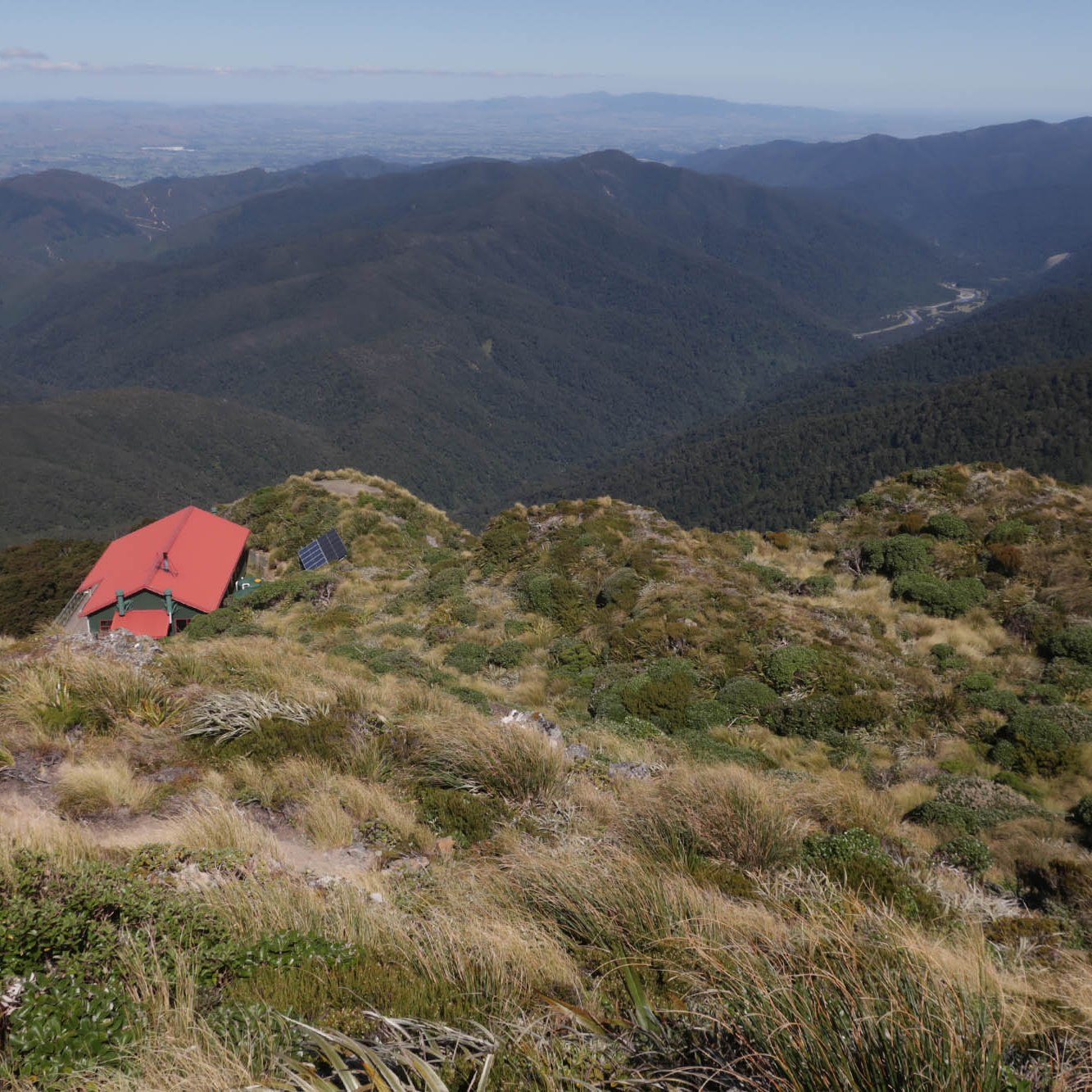
All up we were (initially) 20 people in the new (about six months old, officially opened on 12 July 2019) 32 bunk Powell Hut (1200m). And what a mansion it is. At a quick glance it seems to be roughly three and a half times the size of our wee house (I have to confess that we live in a 45m2 cottage).

It took us 3.5 hours from the carpark to reach the hut around 1:30pm, at a fairly leisurely stroll. We were all alone for about ten minutes before the families arrived. Late lunch on the porch meant we had magnificent views across the Wairarapa plains, while getting familiar with our co-inhabitants. After lunch and coffee we sauntered up the mountain for a couple hundred metres to see where we would be going in the morning. We could see the trig, so knew it wasn’t too far from the hut (1.8km). Towards the east and the Wairarapa side it was blue skies, but towards the west all the highest peaks were in the clouds.

Back at the hut, we poured a tipple and went to sit on what looked like a helipad just above the hut for some peace and quiet. It is surprising how noisy the chatter of adults and kids playing games can be in a, albeit big, confined space. Some time later the hut marshals (from Search & Rescue) who had an aid station and checkpoint at the hut also arrived. They brought along a 2-way radio which we had to take with to the trig to provide feedback to base (eg King and Queen of the mountain, weather conditions, injuries etc).

For dinner we had pasta with basil pesto, red onion, tuna and parmesan cheese. I’ve had pasta with tuna, cheese and onion plenty of times, and truth be told, I’m not sure if the basil pesto did much to enhance the meal. Tea and chocolate for desert, before we retired to, what was still, our own room at the time to get ourselves sorted and ready to leave early in the morning.

Darkness fell, everyone was in bed, and only the howling wind and cracking of shrinking correlated iron could be heard, when a bit after 11pm there was suddenly noise and red lights inside the hallway of the hut. The new hut comprises of four rooms: two small rooms sleep six each and two bigger rooms that sleep ten each. The families and us occupied spots in all the rooms, each trying to have some semblance of privacy. Noisily “bedroom” doors were opened and closed, with the “invaders” scouring the rooms for empty spots. Turns out that a group of five or six very late arriving trampers all tried to find an empty spot to sleep. Three of the group ended up sharing with us.

The use of the red-light setting on headlamps has become a thing of late. In the old days everyone just used their normal white brights lights when one had to use the toilet at night, or if one arrived after dark.

25 January – Powell Hut (1200m) to Mt Holdsworth trig (1470m)

I did not have the best night’s sleep and by 5:45am we were both wide awake. Gerry got up to boil some water for tea (the hut has gas cookers, and even electric lights on timers), and while we were in the kitchen-dining room area, a few others also joined to appreciate the dawn. The wind was still fairly strong (35-40km/h according to MetService), and after breakfast we started walking the uphill to the trig. The wind was tucking at my pack, and every now and again I was blown off my feet. I decided to walk next to the path on the narrowest of ridges.

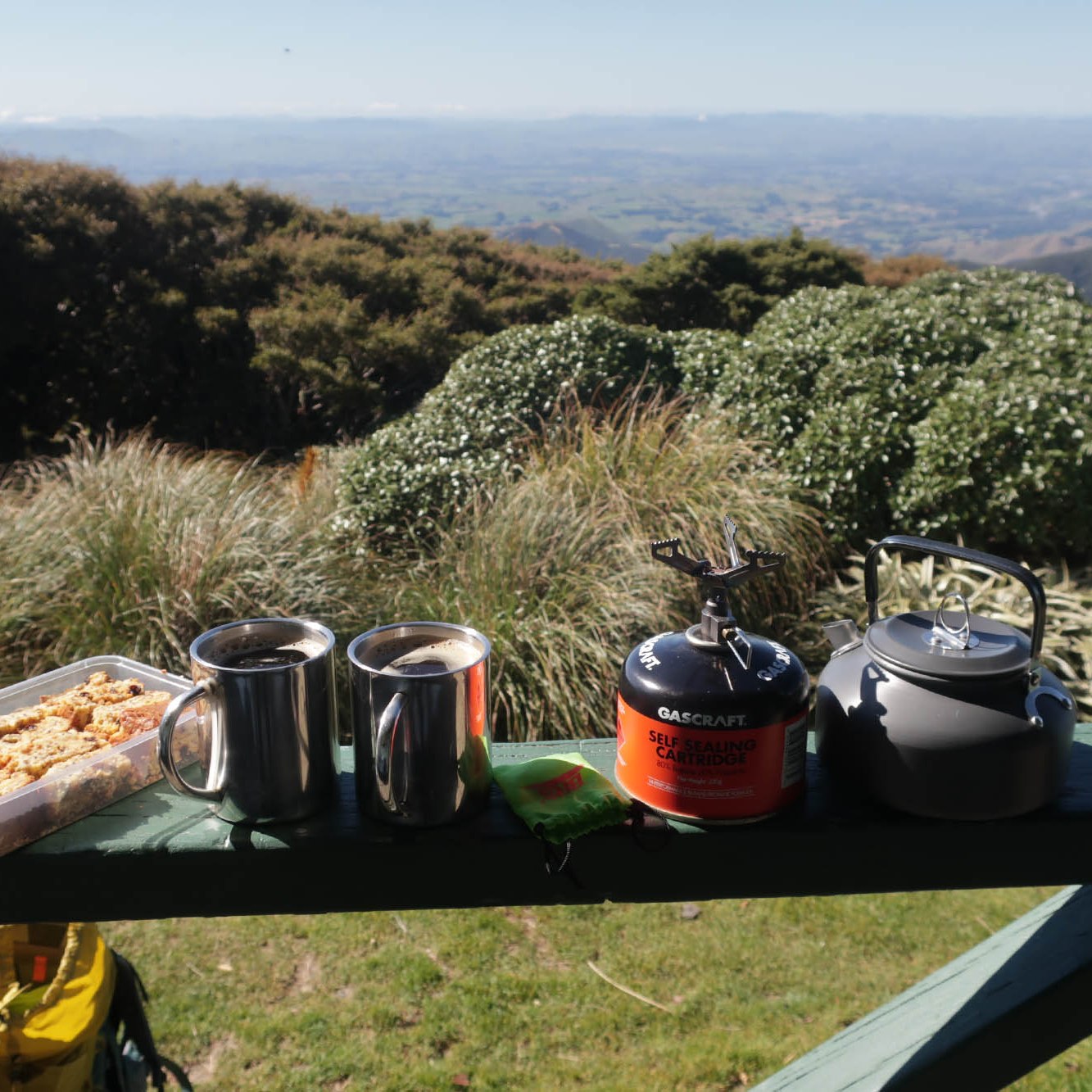
It is about 1.8km to the trig, but we decided to leave by 7am to ensure we could still pitch the fly of a small tent to serve as a shelter, and rig up the camp stove to make coffee, tea and cup-a-soup throughout the morning. With the wind being so strong I had to built a small little shelter with rocks and stone around the stove to prevent the billy from flying off of the mountain. In fact, to get the coffee powder in the cups proved challenging, not to mention getting the water into the cups. Once, while trying to take a sip, the wind blew the coffee right out of the cup and into my face. With a nice mixture of coffee, citronella oil, sunblock and wind blown tears on my cheeks, I was ready to cheer on the runners (and take a few photos while we’re at it). Quite a sight for (or in this case with) sore eyes (as the constant wind in my eyes turned into one of the worst hay fever, sinusitis-attacks I’ve had in quite a long while).

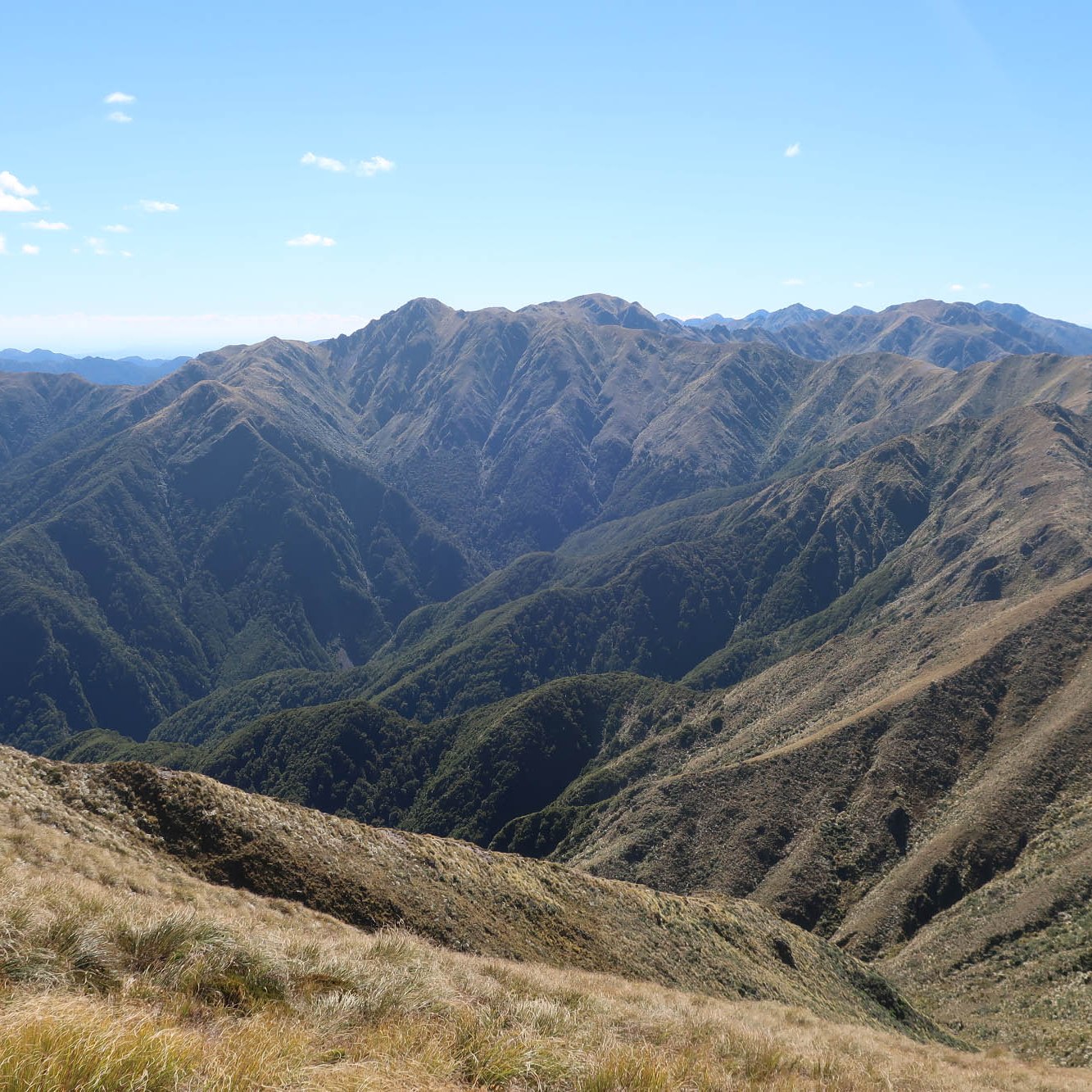
Apart from the wind, the sun was out, it was fairly warm and we had magnificent views across the mountain in all directions. We could spot the runners coming from miles away. The race can be done in either direction and Mt Holdsworth (where we were positioned) is at about 10.4km when going clockwise, as apposed to about 14km going anti-clockwise. The shorter distance meant we had most of the quick runners coming from the Powell Hut side first. Forty-six in total going clockwise, while the other about 150 went anti-clockwise. A constant trickle of runners kept things sociable at the top and even a few trampers were out and about. With the sun out in full force and it being quite hot, a few runners were out of water by the time they reached us. Some were taking off their hydration packs already as they were approaching us, thinking there might be a drink station. We could unfortunately only help a couple of participants with a bit of water.

By 12:00 the tail-end Charlie came past informing us of two ladies that did not make the cut-off at Jumbo and were officially not in the race anymore, but decided to continue regardless. We could see them approaching on the ridge and decided to hang around as we had to pack up anyway. They reached us by 12:35, and we were on our way shortly before 1pm.

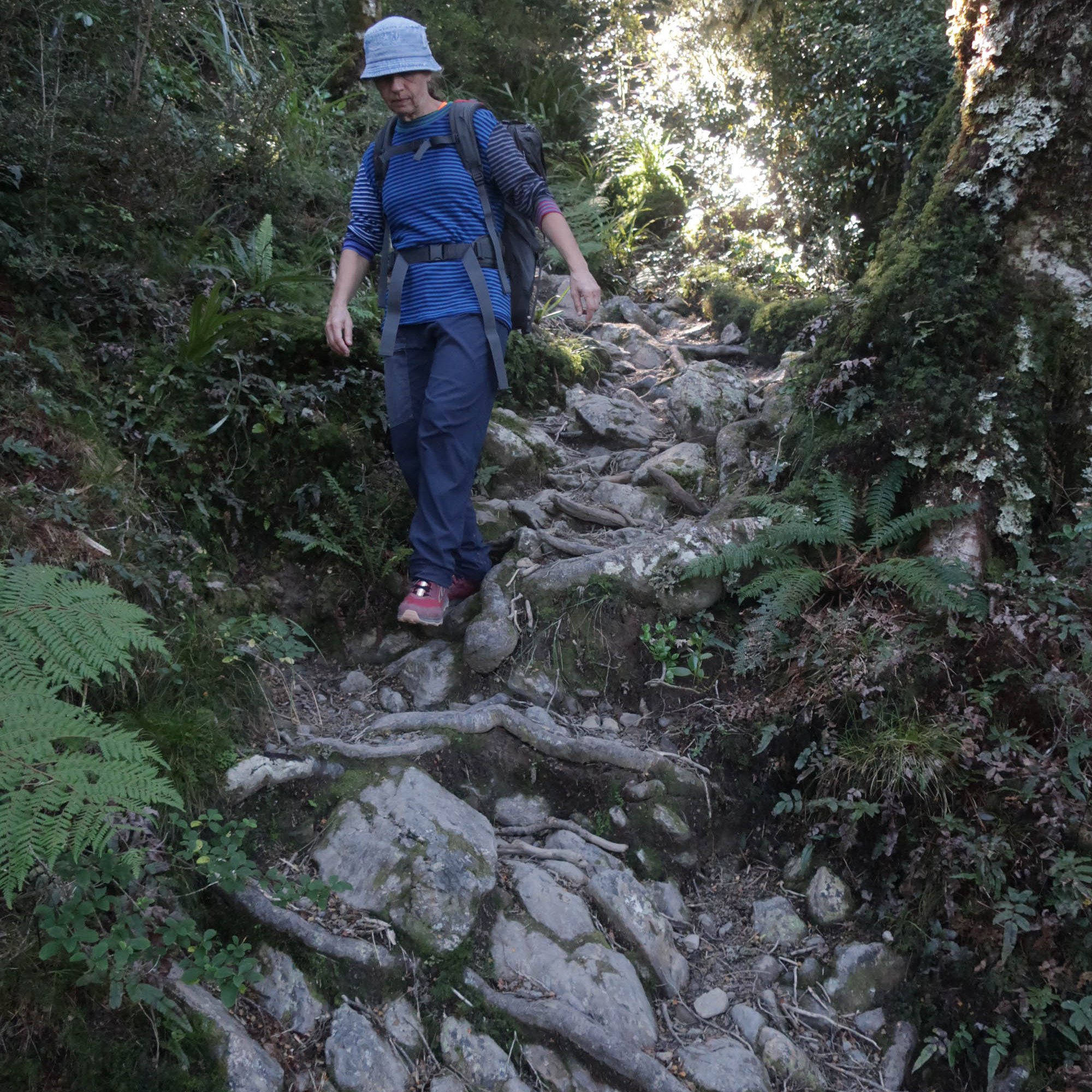
Back at the hut we collected our sleeping bags and some other things we left behind before starting our descent on the very steep section near the hut. Luckily the stairs make it more passable and less of a scramble, but it is still a good quad-buster. Gentle Annie Track, even though rather gradual, is still (to me) just on the wrong side of “comfortable”, easy walking, especially on busted quads. We reached the carpark by 4:30pm on one of the warmest days this summer. We stripped off our soaking wet clothes for dry clean ones, and back in Masterton bought a bunch of cold eats and drinks (ice cream, coffee milk, juice and cherries).

Even though we are not near running anything at the moment, I would love to come back to this race. It is mountain running at its best; steep ascends and descends, narrow ridges, rocky sections, tree roots, some scrambling and generally speaking a tough 24km. One easily gets tricked by the fact that it looks like a short achievable distance, kilometres wise, but the terrain turns this into much more than just a trail or off-road run. Mountain running is, and will always be, another kettle of fish entirely.

newspaper

Stoked to get a photo credit in the local newspaper! Thanks Andrew.